
There are spiritual destinations defined by grand architecture or ancient history. And then there is Kainchi Dham.
Nestled in the serene Kumaon hills of Uttarakhand, near Nainital, this ashram, dedicated to the revered saint Neem Karoli Baba (affectionately known as Maharaj-ji), feels less like a fixed pilgrimage spot and more like a gentle current a river of unconditional love flowing through the pines.
This is not a story of doctrines or complicated philosophies. This is the story of a Miracle Baba who taught the simplest, yet hardest, truth: “Love everyone. Serve everyone. Remember God.” His teaching was his life, his miracles were his compassion, and his legacy is an invisible thread of grace connecting a tiny, forested corner of India to the hearts of millions worldwide, from impoverished villagers to Silicon Valley titans.

To visit Kainchi Dham is to step away from the world’s noise and into a vibration of profound, disarming peace.
The Man in the Blanket: The Essence of Neem Karoli Baba
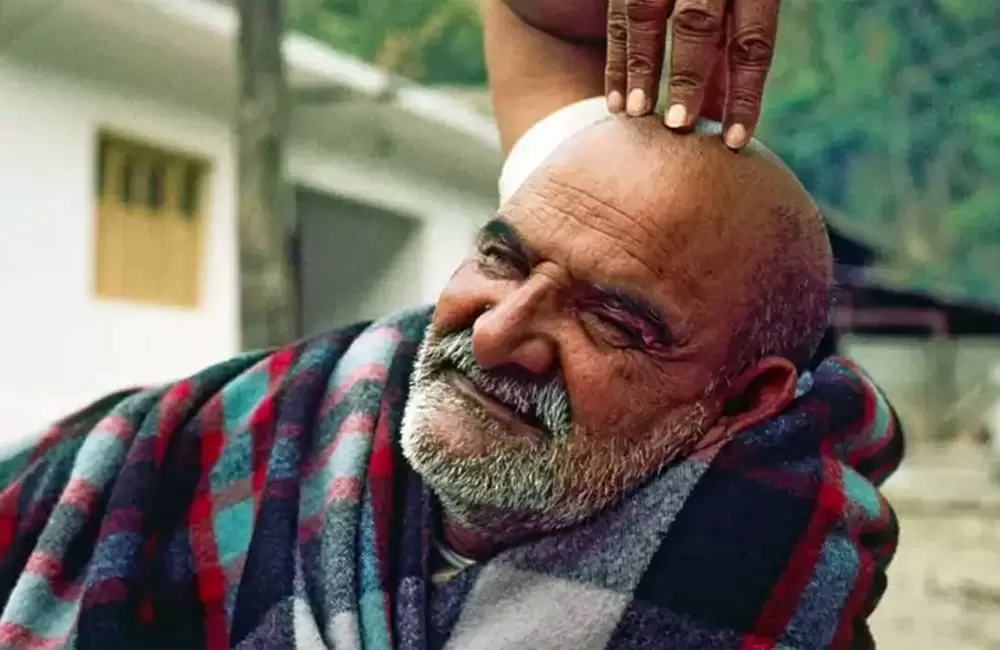
To understand the place, you must understand the man. Neem Karoli Baba (born Lakshman Narayan Sharma around 1900) defied all easy categorization. He rarely gave formal lectures. He often appeared irritable, unpredictable, or completely indifferent. Yet, he was a perfect embodiment of bhakti (devotion) and an unwavering devotee of Lord Hanuman.
His appearance was iconic: a sturdy man, often wrapped in a simple plaid blanket (earning him the moniker Blanket Baba), sitting, smiling, or simply chanting “Ram, Ram.” His method was not instruction; it was divine intervention—a slap of reality, an unexpected comfort, or a miracle that forced the receiver to shed their ego and witness the divine in action.
The Core Teachings: Simple, Profound, Universal
Maharaj-ji’s teachings were the antithesis of complexity. They are distilled into a few powerful commands:
- Love everyone, Serve everyone, Feed everyone, Remember God.
- Tell the truth.
- See God in everyone. (He often simply stated, “Sub Ek”—All is One.)
- The greatest service you can do is to keep your thoughts on God.
He didn't preach a new religion; he simply pointed to the heart of all faith. He famously told Western seekers to follow the teachings of Christ, and advised those seeking advanced meditation to find the Burmese teacher S.N. Goenka. He was, fundamentally, a remover of obstacles both material and spiritual.
The Global Thread: From the Kumaon Hills to Silicon Valley
The ashram gained international notoriety due to its profound influence on key figures in modern culture. Steve Jobs, seeking spiritual guidance in his youth, visited Kainchi Dham. Though Maharaj-ji had already taken Mahasamadhi (left his physical body), Jobs credits the experience with providing the clarity and vision that shaped his life and career at Apple. Years later, at a critical juncture for Facebook, Jobs famously advised Mark Zuckerberg to make the same pilgrimage an anecdote that solidified the ashram’s reputation as a powerful place of personal transformation and miraculous guidance. This unexpected connection between ancient Indian spirituality and modern technological innovation is a testament to the timeless relevance of the Guru’s grace.
Kainchi Dham: A Sanctuary by the River
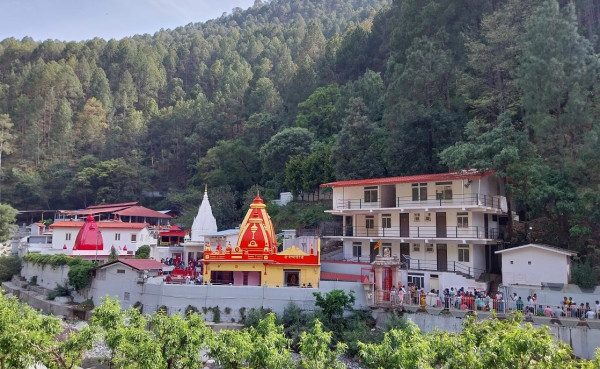
The ashram is set in a quiet valley, approximately 17 kilometers from Nainital, on the banks of the Kosi river. The name Kainchi means ‘scissors’ in Hindi, referring to the two hairpin bends that cross each other to frame the area.

The Foundation: A Testament to Hanuman
The ashram was established by Maharaj-ji in the early 1960s, and the main temple was inaugurated on June 15, 1964. It is primarily a temple dedicated to Lord Hanuman, the epitome of selfless service and devotion, which perfectly mirrors Maharaj-ji's own life.
The temple complex is immaculately maintained but deliberately simple. You will find temples dedicated to Hanuman, Shiva, and Lakshmi Narayan, all built with devotion, not opulence. The sight of the temples reflected in the swiftly flowing river is deeply soothing. The atmosphere is saturated with the sound of continuous chanting of Ram Naam and the presence of Hanuman devotees.
The June 15th Bhandara: The Miracle of the Feast

The most significant event of the year is the annual Bhandara (community feast) on June 15th, commemorating the ashram’s foundation day. This event draws lakhs (hundreds of thousands) of devotees, making it one of the largest annual gatherings in the region.
The real miracle, as devotees attest, is the provision. Without elaborate fundraising or formal organization, the ashram manages to feed everyone who comes, often with food appearing to multiply or simply being more than enough. It's an annual, living demonstration of Maharaj-ji's grace and the power of faith and selfless service. If you choose to visit during this time, be prepared for intense crowds, traffic regulations, and a profoundly moving experience of community devotion.
Practical Guide: Reaching the Haven
Kainchi Dham is located in the Kumaon region of Uttarakhand, close to the city of Nainital. While secluded, it is easily reachable by excellent road and rail networks.
Reaching from Delhi
- By Train (Recommended): This is the most comfortable and reliable option. Take an overnight train (like the Ranikhet Express or the New Delhi Shatabdi Express) from Delhi to Kathgodam Railway Station (KGM). Kathgodam is the railhead for the entire Kumaon region and is only about 35 km from Kainchi Dham. The train journey takes around 6–7 hours.
- Final Leg: From Kathgodam, you can easily hire a pre-paid taxi or a shared cab directly to the Kainchi Dham Ashram. The drive takes about 1 to 1.5 hours.
- By Road (Bus/Car): The distance is approximately 320–340 km (7–9 hours by car). Take the route through Moradabad → Rampur → Haldwani → Bhowali → Kainchi Dham. Overnight luxury buses run frequently from Delhi's ISBT Anand Vihar to Haldwani or Nainital. From either of these stops, local transport is readily available.
Reaching from Dehradun & Rishikesh
Since Dehradun and Rishikesh are on the Western side of Uttarakhand, reaching the Kumaon region (where Kainchi Dham is) requires a significant cross-state journey.
- The Route: The most feasible way is to travel from Dehradun/Rishikesh to Moradabad (Uttar Pradesh) and then head North-East to Haldwani/Kathgodam.
- By Bus: Direct bus services connecting Dehradun/Rishikesh to Haldwani are available, often running overnight, and the journey takes 8–10 hours. This is an economical choice, allowing you to wake up near your destination.
- By Car: A private taxi from Dehradun to Kainchi Dham will take approximately 8 hours, offering a scenic but long drive that skirts the plains before climbing into the hills.
By Air
- The nearest airport is Pantnagar Airport (PGH), about 70 km away. Flights are limited, mainly connecting to Delhi. From Pantnagar, a taxi to the ashram takes about 2–3 hours.
Best Time to Visit
The atmosphere at Kainchi Dham is powerful year-round, but your preferred experience will dictate the timing of your trip.
- Peak Season (March to June): Ideal for comfortable travel and exploration. The weather is pleasant (15°C to 30°C), the skies are clear, and the hill air is invigorating. This is the busiest time, culminating in the massive June 15th Bhandara. If you want to experience the energy of the crowd and the sheer scale of the celebration, this is the time, but be prepared for limited parking and intense crowds.
- Autumn Serenity (September to November): Highly recommended for spiritual seekers. After the monsoon washes the air clean, the skies are brilliantly clear, the views are stunning, and the temperature is cool and dry (10°C to 25°C). The crowds thin out, making it perfect for meditation and peaceful reflection by the river.
- Monsoon (July & August): Avoid this period if possible. Heavy rainfall can lead to slippery roads and the risk of minor landslides, making travel challenging, though the hills are breathtakingly lush and green.
- Winter Chill (December to February): The weather is very cold, often dropping near freezing. The crowds are minimal, offering deep solitude, but you must be prepared with heavy woolens. The ashram remains open for visitors throughout the winter.
Experiencing the Ashram
A visit to Kainchi Dham is deliberately simple, focusing on devotion and service.
- Morning and Evening Aarti (Worship): Participate in the daily aarti rituals held in the Darshan Hall and the main Hanuman Temple Kainchi Dham. The chanting and collective devotion are profoundly moving.
- Parikrama and Silence: Take a quiet walk around the perimeter of the complex (Parikrama), feeling the presence of the river and the surrounding forest. This is the time for inner silence and contemplation.
- Simple Prasad (Blessed Food): Do not leave without accepting the prasad. Maharaj-ji insisted that no one should ever leave the ashram hungry. The simple, blessed food is a central part of the Kainchi experience.
- Nearby Retreats: The Kumaon region is rich with natural beauty. Extend your trip by visiting the famous lakes of Nainital, Bhimtal, and Sattal, or the historic temples in Almora. The area provides a perfect backdrop for integrating the peace you find at the ashram.
