Discover Amazing Badrinath
Badrinath, nestled in Uttarakhand’s Chamoli district at an altitude of 3,133 meters, is one of the holiest pilgrimage sites in Hinduism. Dedicated to Lord Vishnu, the Badrinath Temple stands on the banks of the Alaknanda River, surrounded by snow-clad peaks.
About This Destination
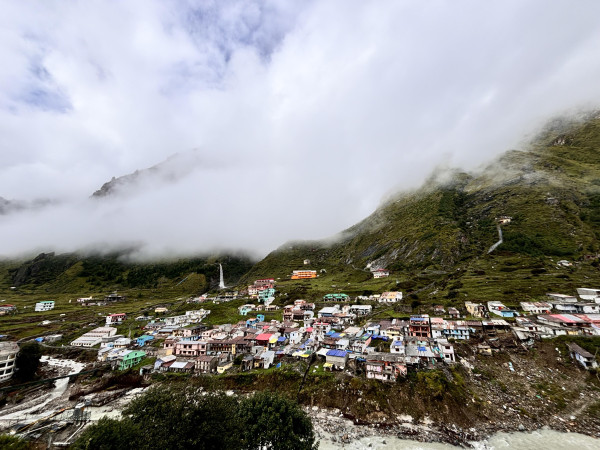
Badrinath is the crowning jewel of the Char Dham Yatra and one of the most sacred pilgrimage sites in Hinduism. Situated dramatically between the Nar and Narayana mountain ranges in the Garhwal Himalayas of Uttarakhand, the town is defined by its ancient temple dedicated to Lord Vishnu (Badri Narayan) and its location on the banks of the turbulent Alaknanda River.
Badrinath is not merely a destination; it is a profound spiritual experience. Perched at an altitude of approximately 3,300 meters (10,827 feet), the entire setting is imbued with an aura of deep sanctity, cold-climate austerity, and breathtaking natural grandeur. The journey here is a demanding yet immensely rewarding act of faith, leading pilgrims to a place believed to bridge the terrestrial world with the divine.
Badrinath’s identity is rooted in ancient mythology and its dramatic high-altitude geography.
Mythological Significance
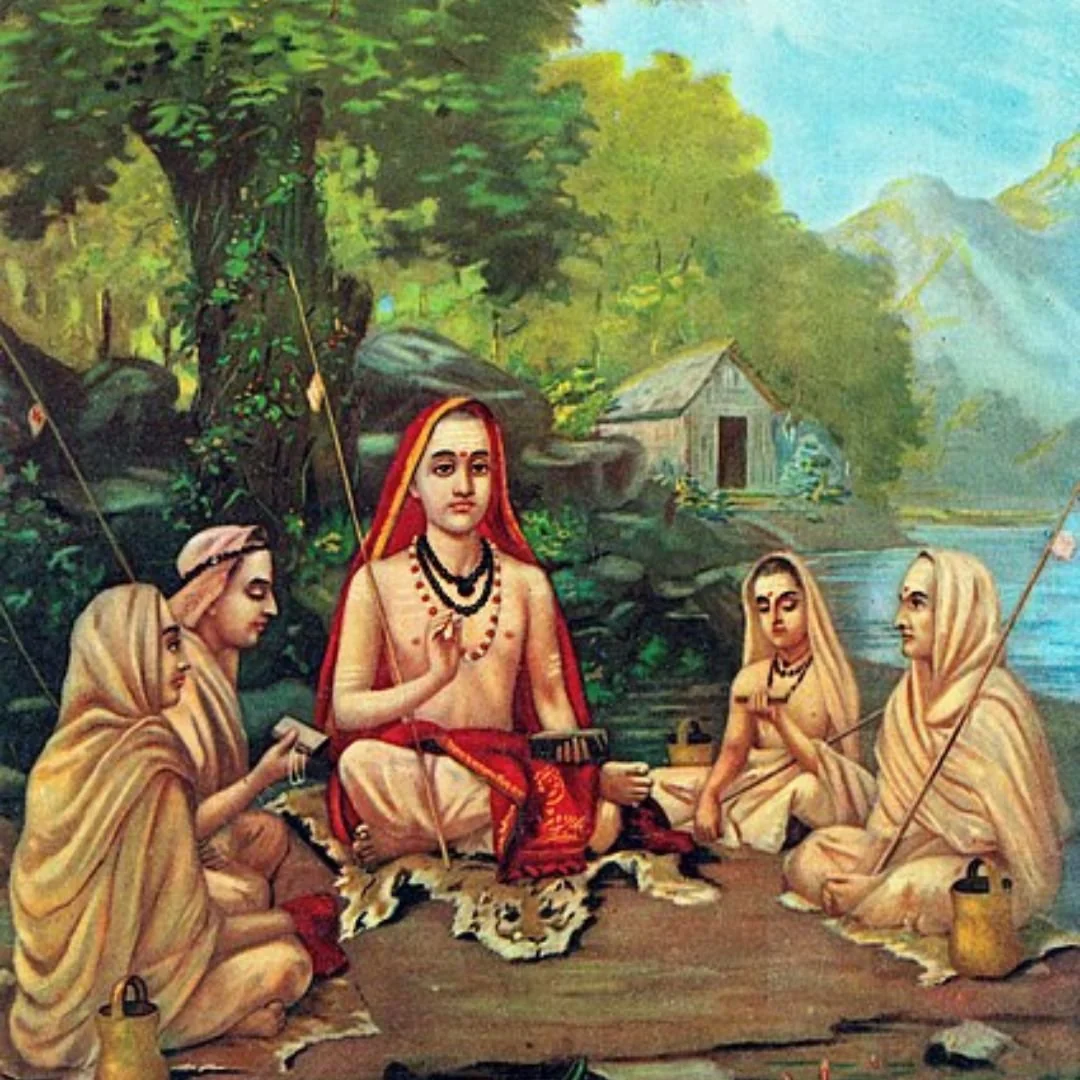
According to Hindu texts, Badrinath is where Lord Vishnu meditated for a thousand years under a Badri (Jujube/Indian plum) tree to secure the welfare of mankind. The black stone murti (idol) of Badri Narayan is believed to have been recovered from the Alaknanda River by Adi Shankaracharya in the 8th century and installed in the temple. The region is revered as one of the holiest places on earth, a true intersection of heaven and earth.
The Temple Architecture
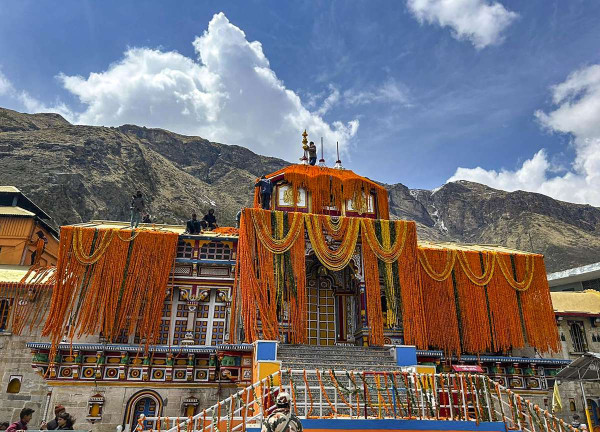
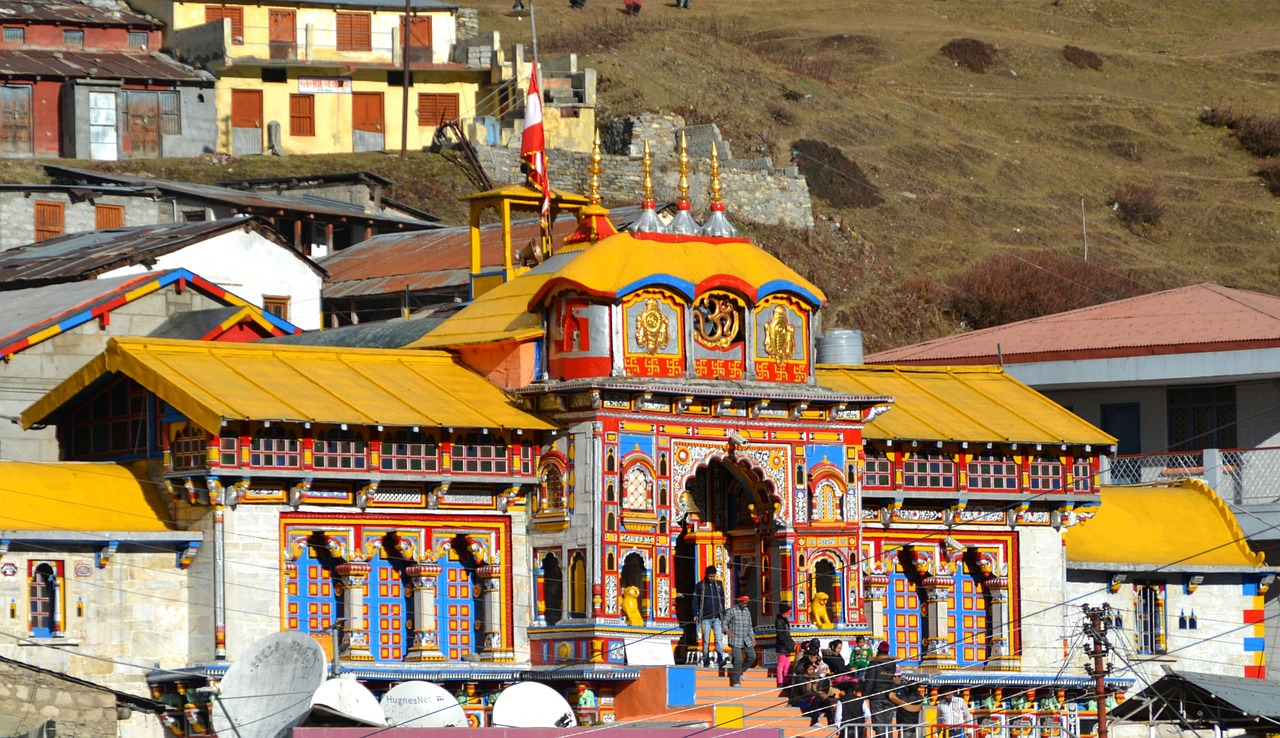
The current temple structure, rebuilt several times due to earthquakes and avalanches, features a classic, colorful Pahari style with a conical dome and a small gold-plated roof. The main complex includes a large courtyard and the Garbgriha (sanctum sanctorum) housing the presiding deity, surrounded by numerous smaller shrines.
Tapt Kund
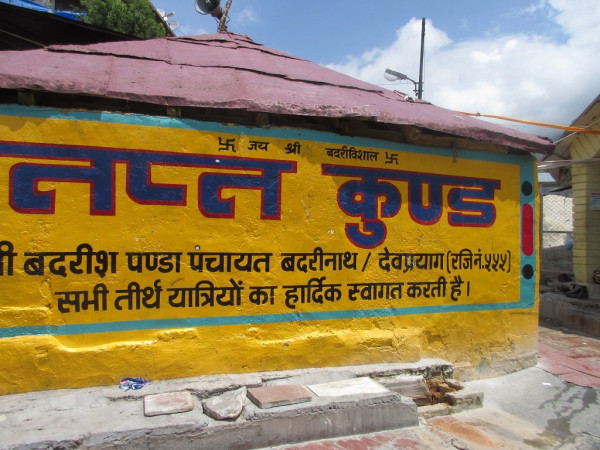
Despite the freezing temperatures, a remarkable feature of Badrinath is the Tapt Kund, a natural hot sulfur spring located just below the temple. Pilgrims take a ritual dip in its warm, therapeutic waters before entering the temple, symbolizing purification before darshan (viewing the deity).
Seasonal Closure
Due to heavy snowfall, the Badrinath temple is accessible only for about six months a year. The gates typically open in late April or early May and close around the time of the Hindu festival of Vijayadashami (mid-November). During the winter closure, the deity is ritually moved to its winter seat (Narsingh Temple in Joshimath).
How to Reach Badrinath

- By Air: The nearest airport is Jolly Grant Airport (DED) in Dehradun, approximately 317 km away. Helicopter services are also available from Dehradun/Phata for those seeking a quicker, luxury option.
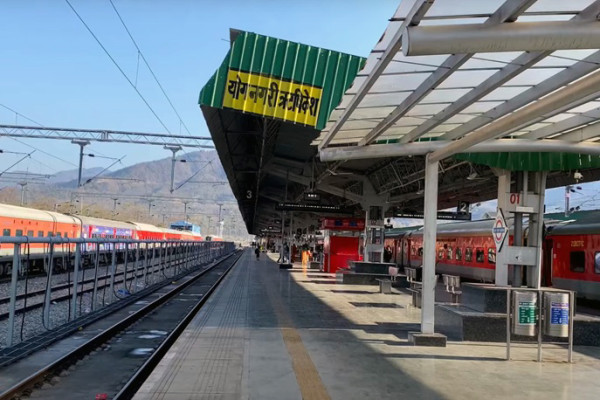
- By Rail: The nearest major railhead is Rishikesh (RKSH), about 297 km away.
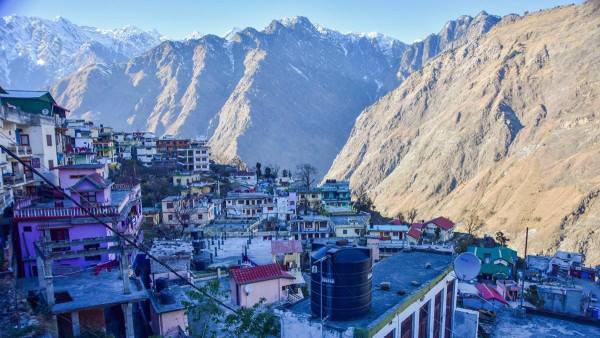
- By Road: Badrinath is the final point on the National Highway 7. The entire road journey is long, winding, and extremely scenic, passing through the Panch Prayag (five holy river confluences).
- Major Stopovers: The journey is typically broken, with essential overnight stops at Rudraprayag, Karnaprayag, or most commonly, Joshimath, which is the last major town (45 km away) before Badrinath.
- Note: The road from Joshimath to Badrinath is usually open only during daylight hours for safety.
Best Time to Visit Badrinath
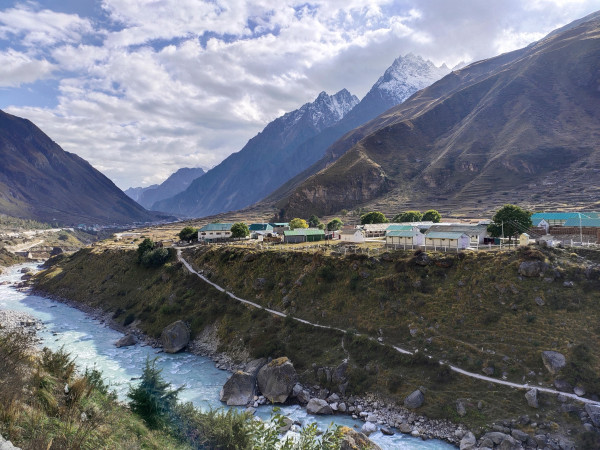
- May to June: The post-winter rush, pleasant weather, and lush green lower valleys. Expect high pilgrim traffic.
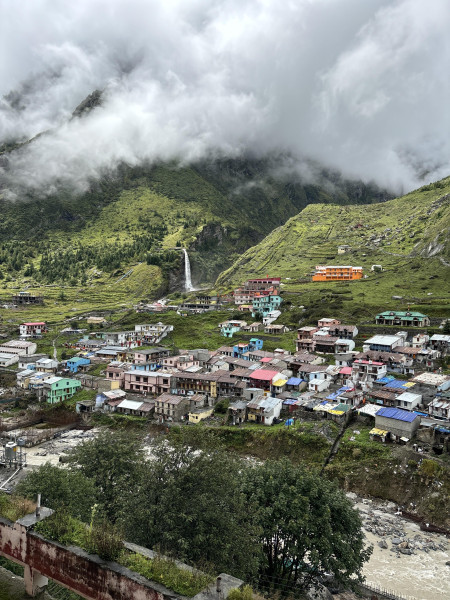
- September to October: Optimal. Post-monsoon period offers the clearest skies, stable weather, and magnificent, sharp views of the snow-clad peaks. The pilgrim traffic is also slightly less intense.
- Avoid: The monsoon season (July–August) due to heavy rainfall, risk of landslides, and road closures.
Things to Do:
The Badrinath region offers a potent mix of intense devotion and high-altitude natural adventure.
1. Temple Darshan and Tapt Kund Snan
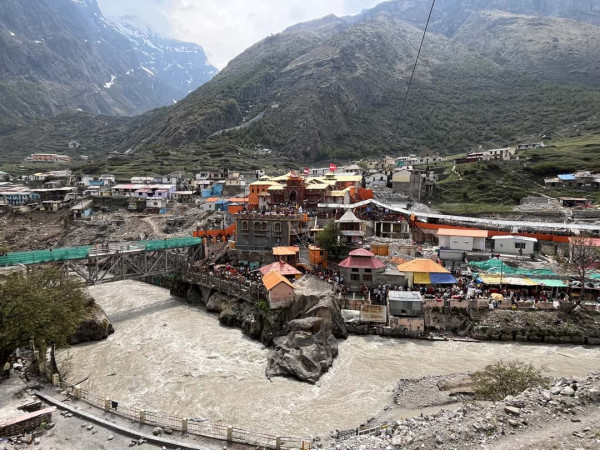
- The Experience: The primary purpose is to receive darshan of Lord Badri Narayan. The day begins early, often with a purifying dip in the hot Tapt Kund followed by the long line for the main temple entry. The morning Maha Abhishek ceremony is particularly significant.
2. Mana: India's First Village
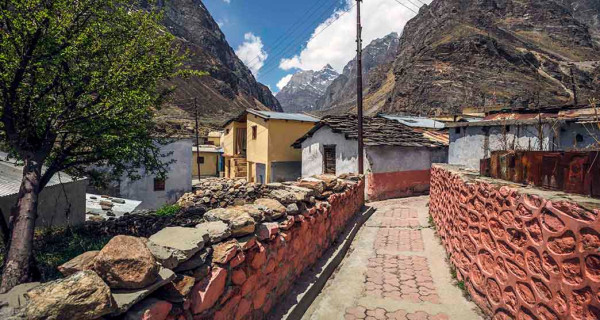
- The Experience: A short 3 km drive from Badrinath takes you to Mana, the First Indian village before the Indo-China border. This village is highly significant in mythology and culture.
- Must-See: Visit the Vyas Gufa (cave where Ved Vyasa is believed to have dictated the Mahabharata) and Ganesh Gufa (where Lord Ganesha is said to have written it). Shop for local handicrafts, especially woolens made by the Bhotia tribe.
3. Vasundhara Falls
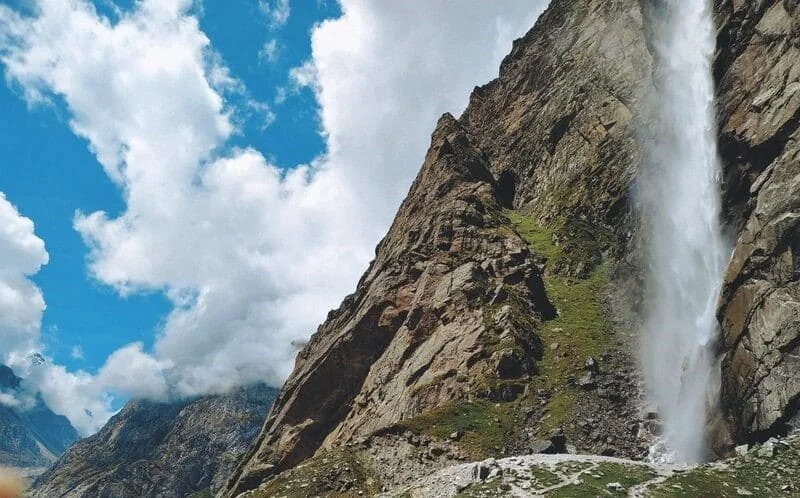
- The Experience: An adventurous, moderate 5 km trek from Mana Village leads to the magnificent Vasundhara Falls. The path passes through meadows and requires crossing the Alaknanda River via a bridge.
- The Reward: The waterfall descends dramatically from a height of over 400 feet, and local lore suggests that its water falls only on pure souls.
4. Valley of Flowers National Park (Nearby)
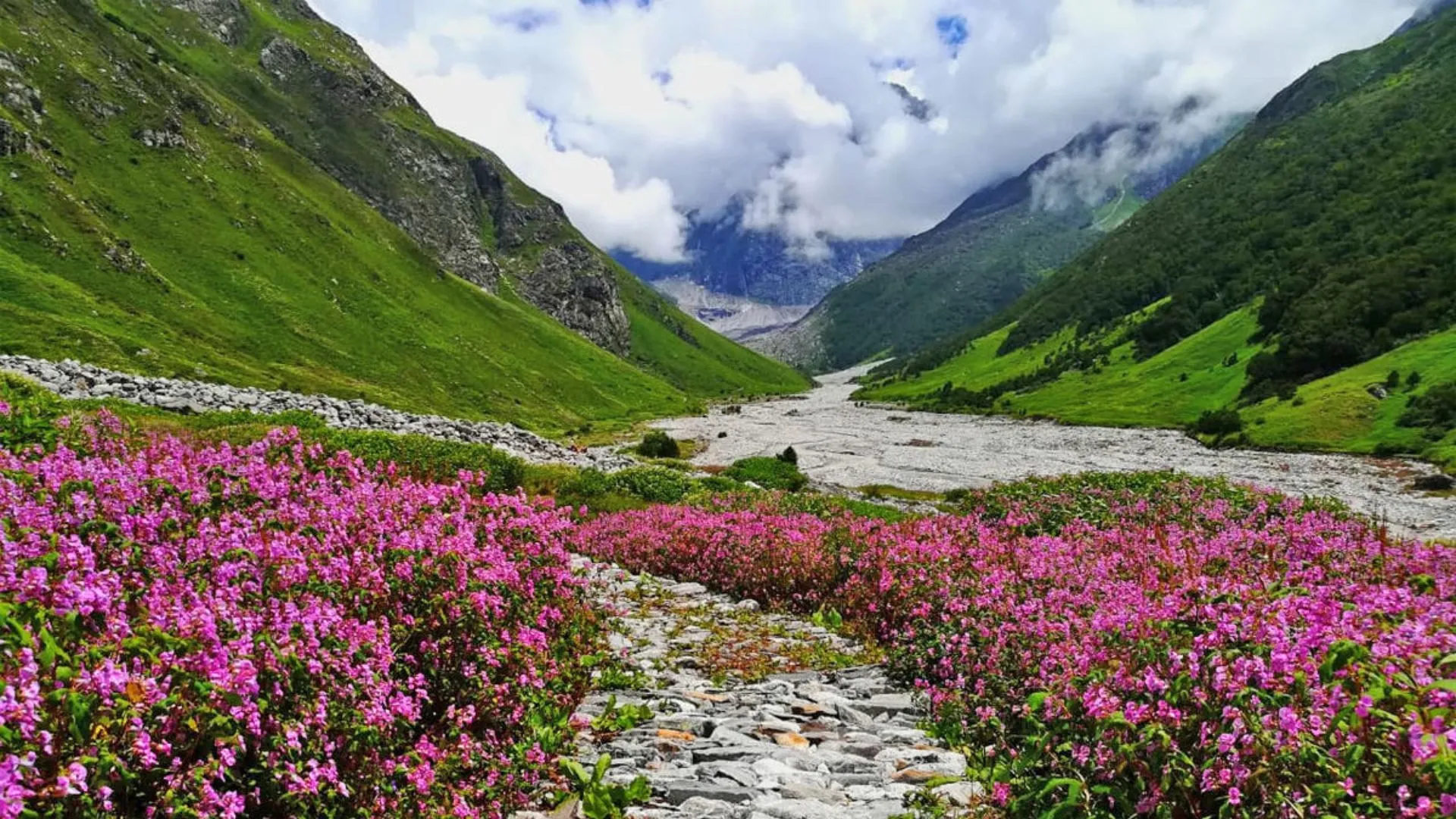
- The Experience: While not in Badrinath itself, the Valley of Flowers road head (Govindghat) is close. This UNESCO World Heritage Site is famous for its vast, colorful carpets of endemic alpine flowers that bloom between July and September.
- Best For: Nature enthusiasts who can extend their trip for the challenging yet rewarding trek to the Valley of Flowers and Hemkund Sahib.
5. Bheem Pul and Saraswati River
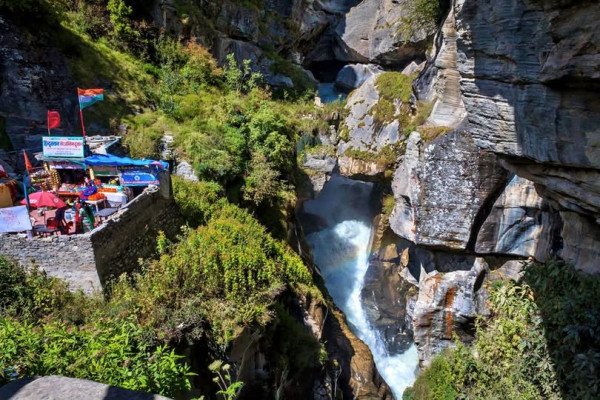
- The Experience: Near Mana, witness the mythical Bheem Pul, a massive rock boulder said to have been placed by Bheema (one of the Pandavas) to cross the raging Saraswati River. The Saraswati is visible here before it disappears underground, adding a layer of mythological wonder.
Top Things to Do & Activities in Badrinath
Discover a world of unforgettable experiences and top activities at this destination! Whether you’re seeking adventure, cultural immersion, relaxation, or family fun, find the best things to do—from sightseeing and outdoor adventures to culinary delights, spiritual journeys, and local events. Enjoy every moment and make your trip truly memorable!