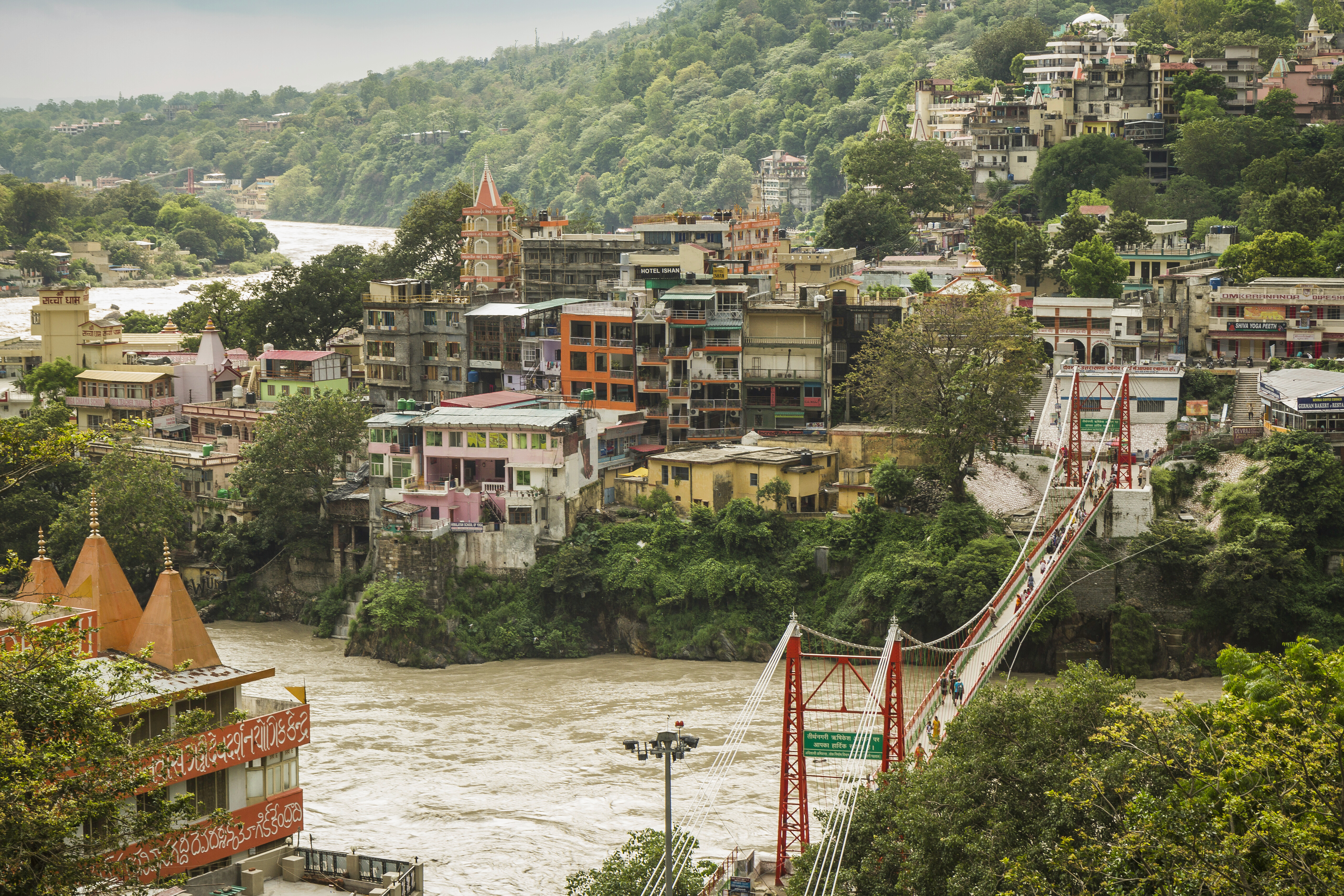
There are places in the world that feel ordinary when you arrive and extraordinary when you leave. Then there are places that grab you the moment you step off the bus — the moment you hear the river, smell the incense, and see the mountains folding blue into the horizon.
Rishikesh in India is one of those rare places.
Nestled in the foothills of the Himalayas in Uttarakhand, Rishikesh is simultaneously India's adventure capital and one of its most sacred spiritual destinations. The same town where the Beatles once came seeking enlightenment is now the starting point for white-water rafting on the Ganges, the home of legendary yoga ashrams, and the gateway to the Char Dham pilgrimage circuit. For first-time visitors, this combination is equal parts thrilling and overwhelming.
This complete travel guide to Rishikesh in India will walk you through everything — the must-visit places, the hidden gems, the smartest itineraries, and the mistakes that first-timers make so you won't have to.
Rishikesh at a Glance
Before diving into the details, here is a quick reference overview of everything you need to know about planning a trip to Rishikesh in India:
| Category | Details |
|---|---|
| Location | Uttarakhand, Northern India (Foothills of the Himalayas) |
| Distance from Delhi | Approximately 250 km (~5–6 hours by road) |
| Best Time to Visit | February to June; September to November |
| Average Trip Duration | 3–5 days |
| Popular For | Yoga, white-water rafting, spirituality, Ganga Aarti, trekking |
| Nearest Airport | Jolly Grant Airport, Dehradun (18 km away) |
| Nearest Railway Station | Rishikesh Railway Station (connected to Delhi and Haridwar) |
| Language | Hindi (English widely spoken in tourist areas) |
| Currency | Indian Rupee (INR) |
| Budget Range | ₹1,500–₹8,000 per person per day (budget to mid-range) |
Why Rishikesh in India Is Unlike Any Destination You've Visited
Most destinations ask you to choose — do you want adventure or peace? History or nature? Spirituality or thrills?
Rishikesh refuses to make you choose. The energy here is genuinely unlike any other place in India. You can spend your morning in a sunrise yoga class at a riverside ashram, your afternoon rafting through Grade IV rapids on the Ganga, your evening watching thousands of diyas float on the river during Ganga Aarti, and your night sleeping to the sound of the river under a Himalayan sky. All within the same town. All within the same day.
That is the real reason why Rishikesh in India has become one of the most visited destinations in the country — and why visitors who come for two days routinely extend to five.
Top Places to Visit in Rishikesh
Laxman Jhula and Ram Jhula: The Iconic Suspension Bridges
No trip to Rishikesh in India is complete without crossing these legendary suspension bridges over the Ganga. Laxman Jhula — an 83-metre iron suspension bridge — is the older and more famous of the two, said to mark the spot where Lord Lakshmana crossed the Ganges on a jute rope. Ram Jhula, slightly further downstream, offers slightly less foot traffic and arguably better views.
Both bridges are lined with temples, ashrams, cafes, and shops on both banks, and crossing them at sunrise or sunset gives you one of the most photogenic moments in all of Rishikesh.
Traveler Insight: Laxman Jhula bridge is technically closed for vehicular traffic — but walking across during early morning (before 7 AM) means you'll have the bridge nearly to yourself before the crowds arrive.
Best Time to Cross: Sunrise or the hour before Ganga Aarti (around 5:30 PM)
Triveni Ghat: Where the River Calls You to Stand Still
Of all the ghats in Rishikesh, Triveni Ghat carries the heaviest spiritual weight. This is the main bathing ghat of the town, believed to be the sacred confluence of the Ganga, Yamuna, and Saraswati rivers. Every evening, the Maha Aarti here — one of the most spectacular in all of northern India — draws hundreds of devotees and travellers from around the world.
The sight of brass lamps swaying in practiced arcs, priests chanting in unison, and the river reflecting it all like a moving mirror is a sound and visual you will not forget.
Don't Miss: The feeding of the large fish (mahaseer) at Triveni Ghat — a ritual that locals participate in daily and that is curiously moving to witness.
Pro Tip: Arrive at the ghat at least 30–40 minutes before the Aarti begins (typically at 6 PM in winter, 6:30 PM in summer) to secure a good viewing spot. Timings change seasonally — verify before visiting.
The Beatles Ashram (Chaurasi Kutia): A Place Frozen in Time
In 1968, John Lennon, Paul McCartney, George Harrison, and Ringo Starr arrived in Rishikesh to study Transcendental Meditation under Maharishi Mahesh Yogi at this ashram. They stayed for weeks, composed much of what would become the White Album, and put Rishikesh on the global map.
Today, the ashram — officially called Maharishi Mahesh Yogi Ashram or Chaurasi Kutia — stands abandoned and overgrown but open to visitors. The crumbling meditation domes, murals painted by visiting artists over the decades, and the eerie quiet of the jungle reclaiming the structures make it one of the most unexpectedly atmospheric places in all of Rishikesh in India.
Entry Fee: ₹150 for Indian nationals, ₹600 for foreign tourists (verify current rates before visiting)
Traveler Insight: Most visitors rush through in 20 minutes. The real experience comes from sitting in one of the old meditation cells in silence for a few minutes — it is unexpectedly powerful.
Neelkanth Mahadev Temple: The Himalayan Pilgrimage Above Rishikesh
Perched at an altitude of 1,330 metres in the dense forests above Rishikesh, Neelkanth Mahadev Temple is one of the most sacred Shiva temples in Uttarakhand. The temple marks the spot where Lord Shiva is believed to have consumed the poison (Halahala) that emerged from the churning of the cosmic ocean — earning him the name Neelkanth ("the blue-throated one").
The drive up through the forest is beautiful in itself, with views of the valley opening behind you as you climb. The temple complex, often crowded with pilgrims and fragrant with marigold offerings, carries an intensity that feels distinct from the more tourist-friendly spaces in the town below.
Best Time: Weekday mornings to avoid heavy crowds; the Mahashivratri festival draws lakhs of pilgrims.
How to Get There: Approximately 32 km from Rishikesh town centre — hire a local taxi or take a shared jeep from Laxman Jhula.
Rajaji National Park: Wildlife at the Edge of Town
What most first-timers don't realize is that Rishikesh in India sits at the edge of Rajaji National Park — a massive 820 sq km forest reserve that is home to elephants, leopards, tigers, deer, and over 300 bird species. A morning jeep safari through Rajaji puts you inside a genuine tiger reserve within an hour of leaving your hotel.
Best Time for Safaris: November to June (park closes during monsoon — July to October)
Pro Tip: Book jeep safaris through registered forest department channels or authorized operators — avoid unregistered guides.
What to Do in Rishikesh: Experiences by Interest
For Adventure Seekers
Rishikesh in India is the undisputed white-water rafting capital of the country. The Ganges through this stretch offers rapids ranging from Grade I to Grade IV, with names like "The Wall," "Roller Coaster," and "Golf Course" that tell you exactly what to expect. Rafting stretches range from 9 km (beginner-friendly) to 36 km (for experienced paddlers), and the season runs from September to June.
Beyond rafting, Rishikesh offers bungee jumping (the highest fixed platform bungee in India, at 83 metres), cliff jumping, giant swing, zip-lining, and kayaking. The adventure camps along the riverbanks — most offering multi-day packages with camping — have made Rishikesh a full adventure destination in its own right.
| Adventure Activity | Season | Approx. Price |
|---|---|---|
| White-water Rafting (16 km) | Sept–June | ₹700–₹1,200 per person |
| Bungee Jumping | Year-round | ₹3,500–₹4,000 per person |
| Giant Swing | Year-round | ₹3,000–₹3,500 per person |
| Camping (2N/3D) | Oct–June | ₹3,000–₹6,000 per person |
| Kayaking | Oct–June | ₹800–₹1,500 per session |
Prices are approximate and subject to change — verify with operators before booking.
For Yoga & Wellness Seekers
Rishikesh holds a globally recognized claim as the Yoga Capital of the World, and the title is deserved. The town has hundreds of registered yoga schools offering everything from drop-in morning classes to 200-hour and 300-hour Yoga Teacher Training Programs (YTTPs) certified by Yoga Alliance.
For short-stay visitors, many ashrams offer week-long immersive programs combining yoga, meditation, and Ayurvedic treatments. Parmarth Niketan — one of the largest ashrams in India — is a good starting point for first-timers; they welcome visitors for drop-in yoga sessions and evening Ganga Aarti without requiring registration.
Traveler Insight: The yoga quality in Rishikesh varies enormously — from genuinely transformative teachers with decades of experience to commercial operators targeting tourist footfall. Ask to sit in on a trial class before committing to a longer program.
For Trekkers
Rishikesh is the starting point for several Himalayan treks. The Neer Garh Waterfall trek (easy, 2.5 km) is a beautiful short option for those with limited time. More serious trekkers use Rishikesh as a base for routes toward Kunjapuri Temple, Chopta-Tungnath (one of the highest Shiva temples in the world), and eventually the Kedarnath trail.
Best Trekking Season: May–June and September–November
Best Time to Visit Rishikesh in India
Understanding the seasons is critical for planning a trip to Rishikesh in India, as each period offers a dramatically different experience:
| Season | Months | What to Expect |
|---|---|---|
| Peak Season (Spring) | February–June | Pleasant weather (10°C–35°C), perfect for rafting and trekking; most popular period |
| Monsoon | July–August | Heavy rainfall, river too dangerous for rafting, road disruptions possible — generally avoid for adventure |
| Post-Monsoon (Autumn) | September–November | Excellent weather, rivers high from monsoon (great rafting), fewer crowds than spring |
| Winter | December–January | Cold (3°C–15°C), peaceful, good for yoga retreats; many outdoor adventures paused |
Traveler Insight: September–October is arguably the best-kept secret window for visiting Rishikesh. The air is clear after the monsoon, the river is full and fast (great rafting), the mountains are green and dramatic, and the town is noticeably less crowded than the March–May peak.
How to Reach Rishikesh
By Air: The nearest airport is Jolly Grant Airport, Dehradun — approximately 18 km from Rishikesh town. Flights connect Dehradun to Delhi, Mumbai, Bangalore, and other major cities. Taxis from the airport to Rishikesh take approximately 30–40 minutes.
By Train: Rishikesh Railway Station has direct connections to Delhi. Haridwar Junction (25 km away) is the more connected station — take a taxi or bus onward to Rishikesh. The Dehradun Shatabdi from Delhi is a popular option.
By Road: From Delhi, Rishikesh is approximately 250 km via the Delhi-Meerut Expressway and NH7 — a journey of 5–6 hours by car. Volvo and deluxe buses operate overnight and daytime services from ISBT Kashmere Gate, Delhi.
Where to Stay in Rishikesh
Accommodation in Rishikesh in India spans a wide range — from riverside ashrams offering simple rooms with all meals for under ₹1,500 per night to luxury resorts and glamping camps on the riverbanks.
| Stay Type | Best For | Price Range (Per Night) |
|---|---|---|
| Ashram Stay (e.g., Parmarth Niketan) | Spiritual seekers, yoga immersion | ₹800–₹2,500 |
| Budget Guesthouses (Laxman Jhula area) | Solo travelers, backpackers | ₹500–₹1,500 |
| Mid-Range Hotels (Tapovan area) | Couples, families | ₹2,000–₹5,000 |
| Riverside Camps | Adventure travelers, groups | ₹3,000–₹7,000 (with meals) |
| Luxury Resorts | Honeymooners, premium travelers | ₹8,000–₹25,000 |
Verify current rates directly with properties before booking — seasonal variation is significant.
How Many Days Do You Need in Rishikesh?
3 Days (Essential Rishikesh): Cover Triveni Ghat Aarti, Beatles Ashram, Laxman Jhula, a white-water rafting session, and one yoga class. This is the minimum to feel like you've actually experienced the town rather than just passed through it.
5 Days (Immersive Rishikesh): Add Neelkanth Mahadev Temple, a day at Rajaji National Park, a Neer Garh waterfall trek, bungee jumping, and more time for yoga or meditation programs. This is the recommended duration for first-time visitors.
7+ Days (Deep Dive): Begin a formal yoga retreat, add a side trip to Haridwar (45 minutes away), explore the Char Dham yatra planning with Rishikesh as your base. Ideal for those coming specifically for wellness or pilgrimage.
Essential Travel Tips for First-Time Visitors
Respect the Sacred Nature of the Town. Rishikesh is a religiously significant town — alcohol is officially banned, meat is unavailable in most restaurants, and modest dress is expected near temples and ghats. Many travelers find the discipline refreshing rather than restrictive.
Book Adventure Activities Through Trusted Operators. The rafting and bungee operators in Rishikesh range from fully certified to dangerously under-equipped. Always verify that your operator holds valid government certification and provides proper safety gear. Avoid touts who approach you on the street.
Carry Cash. ATMs are available but can run out during peak season. Carry sufficient cash for small purchases, ashram donations, and market shopping.
Don't Underestimate the River Current. The Ganges through Rishikesh can look serene from the banks and be extremely powerful in the channel. Never swim unsupervised, especially during or after monsoon.
Plan for Crowd-Free Ghat Time. Triveni Ghat and Laxman Jhula are extremely crowded from mid-morning onwards. The same spots at 6 AM feel like an entirely different world.
Common Mistakes First-Time Visitors Make
Arriving in July or August without research. The monsoon makes river-based activities impossible, roads occasionally dangerous, and the town far less pleasant than its peak-season version. Check weather and conditions before booking.
Spending all time in one area. Many visitors camp near Laxman Jhula and never explore Tapovan, Ram Jhula, or the areas beyond the bridges. Rishikesh rewards wandering.
Overpacking the itinerary. Rishikesh works best when you leave time to simply sit by the Ganga, have a long meal at a rooftop cafe, or join an unplanned evening Aarti. Over-scheduling defeats the purpose.
Not budgeting time for Haridwar. Just 45 minutes downstream, Haridwar's Har Ki Pauri ghat hosts one of India's most spectacular Ganga Aarti ceremonies. Any Rishikesh itinerary of 4+ days should include a half-day or full day in Haridwar.
Plan Your Rishikesh Trip with TiketsToTrip
A destination as layered as Rishikesh in India deserves a travel plan that's as thoughtful as the place itself. The difference between a trip that barely scratches the surface and one that genuinely moves you often comes down to the details — the right rafting stretch, the right ashram, the right sunrise spot. That is where TiketsToTrip comes in.
Why Book Your Rishikesh Trip with TiketsToTrip?
- Expert-curated Rishikesh packages combining adventure, spirituality, and comfort — tailored for your travel style and group
- Verified adventure operators only — we work exclusively with government-certified rafting and bungee providers for complete safety assurance
- Seamless flight and hotel booking through our platform, including riverside camps and ashram stays rarely listed on generic booking sites
- Personalized itinerary building — whether you want a 3-day adrenaline weekend or a 7-day yoga and wellness retreat, our experts plan it down to the hour
- Real local knowledge — our team has first-hand experience with Rishikesh across every season and knows exactly what to recommend for your specific travel dates
Ready to experience Rishikesh in India the right way? Visit TiketsToTrip and let our travel experts build the perfect Rishikesh itinerary for you — from your first sunrise yoga class to your final night at the river.
Related Blogs
- Things to Do in Haridwar: A Complete Travel Guide
- Char Dham Yatra: Everything You Need to Know Before You Go
- Best Adventure Activities in Uttarakhand
- Top Yoga Ashrams in Rishikesh for First-Time Visitors
- Kedarnath Trek: Guide, Itinerary & Travel Tips
- Best Hill Stations Near Delhi for a Weekend Getaway
- Uttarakhand Travel Guide: Places, Tips & Best Time to Visit
Frequently Asked Questions About Rishikesh in India
What is Rishikesh in India famous for?
Rishikesh is famous for being simultaneously the Yoga Capital of the World and India's premier adventure destination. It draws visitors for white-water rafting on the Ganga, Himalayan trekking, yoga and meditation retreats, the Ganga Aarti ceremony, and its status as the gateway to the Char Dham pilgrimage circuit in Uttarakhand.
Is Rishikesh safe for solo travelers and first-time visitors?
Yes — Rishikesh is considered one of the safer destinations in India for solo travelers, including solo women. The town has a well-established tourist infrastructure, is heavily frequented by both domestic and international visitors, and its spiritual character means a generally respectful, low-crime environment. Standard travel precautions apply, especially around water activities — always use certified operators.
How many days are enough for Rishikesh?
Three days is the minimum to experience the key highlights of Rishikesh in India. Five days allows a more immersive experience including yoga sessions, trekking, adventure activities, and a day trip to Haridwar. Visitors specifically coming for yoga retreats or teacher training programs typically stay for 7–28 days.
What is the best time to visit Rishikesh?
February to June is the peak season with the best weather for all outdoor activities. September to November is an excellent shoulder season with fewer crowds and high river levels perfect for rafting. July and August (monsoon) are best avoided for adventure activities.
Can you do white-water rafting in Rishikesh throughout the year?
No. Rafting in Rishikesh operates from September to June. The Ganges is considered too dangerous for recreational rafting during the monsoon months of July and August due to extremely high water levels and strong currents. Always check current river conditions with your operator before booking.
This guide is regularly updated to reflect current travel conditions and entry requirements. Entry fees and timings are subject to change — verify with relevant authorities before visiting. All prices mentioned are approximate and may vary by season, operator, and availability.
