Discover Amazing Kashmir
Kashmir, known as paradise on earth, captivates with its snow-covered peaks, serene lakes, vibrant gardens, and rich culture. Its breathtaking valleys and peaceful charm attract travelers year-round.
About This Destination
Srinagar, often celebrated as the "Venice of the East," is more than just a city; it is a picturesque tableau where nature, history, and unique culture converge. The summer capital of Jammu and Kashmir, Srinagar’s global fame rests upon the tranquil beauty of its vast Dal and Nigeen Lakes, the romantic tradition of its floating houseboats, and the vibrant tapestry of its Mughal Gardens, all set against the dramatic backdrop of the Zabarwan and Pir Panjal mountain ranges.
This guide provides a comprehensive, sequential, and highly helpful roadmap for planning your trip, detailing how to reach the city, what season is best for your travel goal (be it blossoms or snow), and a curated itinerary to ensure you capture the essence of this mesmerizing destination without missing the essential sights.
History and the Identity of Srinagar
Srinagar boasts an ancient history, with records suggesting its existence stretches back over two millennia. The area of the present city is often traced to the Mauryan Emperor Ashoka, who is credited in the historical chronicle Rajatarangini with establishing an old capital named Srinagari in the vicinity, which is now identified with Pandrethan.
The modern location of Srinagar, at the base of the Hari Parbat hill, is largely attributed to King Pravarasena II of the Karkota Dynasty, who founded a new capital named Pravarapura in the 6th century CE. The beautiful name Srinagar is a Sanskrit word often interpreted as "City of Sri" (referring to the Hindu Goddess Lakshmi, the deity of prosperity and beauty) or "City of the Sun" (Sūrya-nagar), a fitting title for this perpetually enchanting landscape.
The Era of Mughal Splendor
Srinagar’s most enduring architectural and horticultural legacy was bequeathed by the Mughal Emperors. Beginning in the late 16th century, emperors like Akbar, Jahangir, and Shah Jahan used the Kashmir Valley as their favored summer retreat. They were captivated by its climate and natural splendor, leading them to commission the exquisite Mughal Gardens Shalimar Bagh, Nishat Bagh, and Chashme Shahi designed in the Persian Charbagh (four-part) style. These gardens are now essential landmarks, showcasing the era's sophisticated taste and love for natural beauty.
During the medieval period, particularly under the Shah Mir dynasty, the city also emerged as the core of Kashmiriyat, the unique syncretic culture that harmoniously blends various spiritual traditions, evident in the coexistence of ancient Hindu temples, Buddhist sites, and revered Sufi shrines like the Hazratbal Dargah.
How to Reach Srinagar Seamlessly
Srinagar is the primary transport hub of the Kashmir Valley. While road connectivity is critical, air travel remains the fastest and most reliable option for reaching the city.
By Air (Recommended and Fastest)
- Nearest Airport: Sheikh ul-Alam International Airport, Srinagar (SXR).
- Connectivity: SXR is a well-developed domestic airport offering frequent direct flights from all major Indian metro cities, including Delhi, Mumbai, Bangalore, and Kolkata. Traveling to Srinagar by flight is the most efficient and least time-consuming way to begin your Kashmir journey.
- Airport to City: The airport is conveniently located just 10 to 12 kilometers from the Dal Lake area and the city center. The ride by pre-paid taxi or app-based cab typically takes 30 to 45 minutes, though travelers should account for security checks.
By Rail (Via Jammu)
- Srinagar Railway Connectivity: The city's local railway station (SINA) is currently operational only for trains within the Kashmir Valley (like Baramulla–Banihal) and is not connected to the main Indian railway network.
- Major Railhead: The primary rail gateway for reaching Srinagar is the Jammu Tawi Railway Station (JAT). This station connects to the entire country, including direct trains from major cities.
- Jammu to Srinagar: The remaining journey from Jammu Tawi to Srinagar (approximately 270 km) must be completed by road (taxi or bus). This leg of the trip takes a significant amount of time, usually around 7 to 9 hours, via the Jammu-Srinagar National Highway (NH 44), and is subject to weather and road conditions.
By Road (The Adventure Route)
- Highway: The NH 44 is the lifeline of the Kashmir Valley, running through the Pir Panjal mountains and connecting Srinagar to Jammu and the rest of India.
- Road Trip: A scenic road trip from Delhi to Srinagar is an adventure traveler favorite. However, the road is prone to frequent closures, especially in winter due to heavy snowfall and in the monsoon due to landslides, particularly around the Banihal sector. Travelers driving themselves or taking a bus should check road status updates meticulously before departing.
Best Time to Visit Srinagar: What Season is Right for You?
Srinagar is famed for its distinct beauty in every season. Choosing the best time to plan your Srinagar vacation hinges entirely on the sights and activities you prioritize.
The Spring Bloom (March to May)
- Vibe: This is often considered the peak tourist season due to the wonderfully mild and pleasant weather, making it the best climate for Srinagar sightseeing. The landscape is bursting with color.
- Highlight: The world-famous Indira Gandhi Memorial Tulip Garden opens for just a few weeks in late March or early April, creating a spectacular, unmissable floral carpet. If your goal is to witness the Tulip Festival in Srinagar, this is the essential window.
The Summer Escape (June to August)
- Vibe: The weather is warm but not oppressive, with lush green landscapes and comfortable day temperatures (up to 30°C). This is the ideal time for families, boat tours, and escaping the intense heat of the Indian plains.
- Highlight: Perfect weather for trekking, trout fishing, and long shikara rides on Dal Lake.
The Golden Autumn (September to October)
- Vibe: A serene and arguably the most beautiful season for photography. Temperatures are cool and dry. The legendary Chinar trees turn shades of gold, amber, and crimson, coating the valleys in a spectacular, fiery hue.
- Highlight: Clear skies and pleasant touring conditions are perfect for Srinagar autumn travel.
The Winter Wonderland (November to February)
- Vibe: Freezing cold, with frequent heavy snowfall. The atmosphere is magical, turning the landscape into a white paradise. Temperatures often drop below freezing (as low as 4 ° C).
- Highlight: This is the best time to visit Srinagar for snowfall and is ideal for travelers heading to nearby Gulmarg for skiing and winter sports. The famous Dal Lake sometimes freezes partially in January, a spectacular and rare sight.
Things To Do in Srinagar: A 3-Day Essential Itinerary
A minimum of 3 days in Srinagar allows you to comfortably cover the iconic water-based activities and the historical attractions.
Day 1: The Iconic Lakes and Houseboat Experience
The first day is dedicated to the heart of Srinagar: its pristine lakes.
- Morning: The Shikara Ride. Begin with the quintessential activity: a shikara ride on Dal Lake. The gondola-like boats are beautifully decorated, offering a window into the floating world of the lake dwellers. Your boatman will take you past the famous floating vegetable market (best seen very early morning), floating gardens, and stationary shops selling Kashmiri handicrafts. This is a must-do for Srinagar first-time visitors.
- Mid-day: Houseboat Stay. Settle into a traditional Kashmiri houseboat on Dal Lake or Nigeen Lake. These wooden beauties are stationary, known for their stunning walnut wood carvings (Khatamband ceilings), and offer a unique, luxurious floating hotel experience. Nigeen Lake is often preferred for its quieter, more tranquil setting.
- Evening: Char Chinar Sunset. Take a shikara to the small island of Char Chinar, marked by four majestic Chinar trees. The spot is perfect for enjoying a magical sunset over Dal Lake, with the mountains providing a stunning backdrop.
Day 2: Mughal Royalty and Hilltop Views
Focus on the architectural and spiritual marvels flanking the lakes.
- Morning: The Mughal Gardens. Explore the three legendary Mughal Gardens, starting early to avoid crowds and heat:
- Nishat Bagh (Garden of Pleasure): Known for its 12 terraced levels and superb open view of the Dal Lake.
- Shalimar Bagh (Abode of Love): The largest and historically most famous, featuring a series of cascading fountains and intricate waterworks.
- Chashme Shahi (The Royal Spring): Smaller and renowned for its natural spring water, which is believed to have medicinal properties.
- Mid-day: Pari Mahal. Visit the Pari Mahal (Palace of Fairies), a historic seven-terraced Mughal garden built atop the Zabarwan range. The ruins of this former Buddhist monastery and later Mughal astronomical center provide the best panoramic views of Srinagar city and the entire Dal Lake.
- Afternoon: Shankaracharya Temple. Ascend the Shankaracharya Hill (Takht-e-Suleiman) to reach the ancient Shankaracharya Temple. Dedicated to Lord Shiva, the stone structure is historically significant and offers unmatched aerial views of the entire Kashmir Valley. Remember to adhere to security rules at the hilltop.
Day 3: Old City Culture and Spiritual Heart
The final day explores the vibrant cultural core and historical shrines.
- Morning: Hazratbal Shrine. Visit the Hazratbal Shrine, a pristine white marble mosque located on the northern bank of Dal Lake. It is the most revered Muslim shrine in Kashmir, famous for housing a holy relic, the Moi-e-Muqaddas (a hair strand of Prophet Muhammad). The location and architecture are deeply serene and highly photogenic.
- Mid-day: Old City Architecture. Explore the unique wooden architecture of the Old City (Shahr-e-Khaas). Visit the Jamia Masjid, a sprawling wooden mosque known for its courtyard and the hundreds of wooden pillars, showcasing a distinct blend of Hindu and Islamic styles. Also, see the beautiful wood-carved Khanqah-e-Muala (Shah Hamdan Shrine).
- Afternoon: Shopping and Souvenirs. Complete your trip by finding the perfect Kashmiri handicrafts. The bustling Lal Chowk is the city’s central commercial hub, while the pedestrianized Polo View Market is ideal for buying: authentic Pashmina shawls, intricately carved walnut wood products, Kashmiri saffron, and decorative paper-mâché crafts.
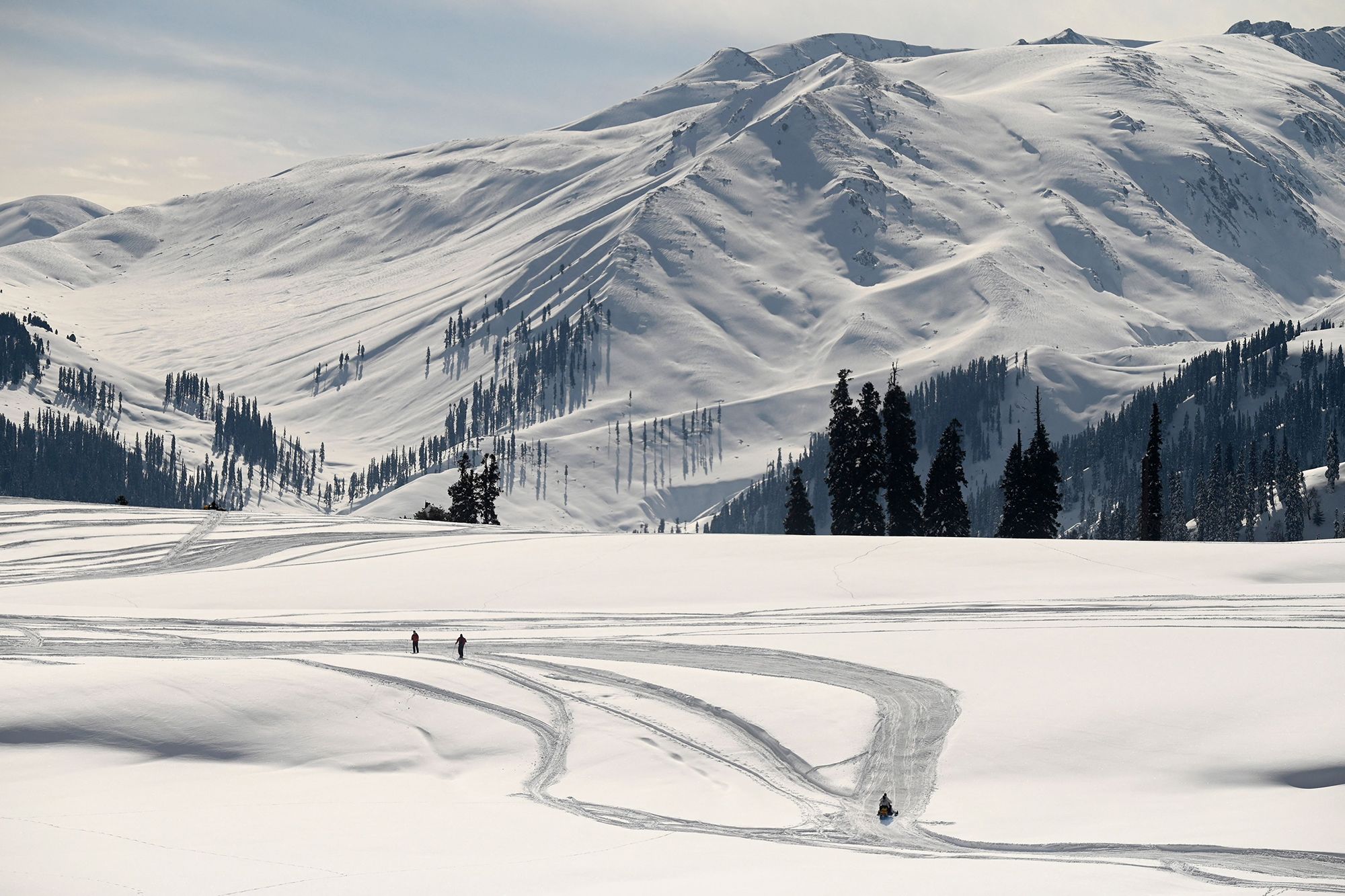
Top Things to Do & Activities in Kashmir
Discover a world of unforgettable experiences and top activities at this destination! Whether you’re seeking adventure, cultural immersion, relaxation, or family fun, find the best things to do—from sightseeing and outdoor adventures to culinary delights, spiritual journeys, and local events. Enjoy every moment and make your trip truly memorable!