Discover Amazing Leh Ladakh
Leh Ladakh, nestled in the Himalayas, is known for its stunning landscapes, high-altitude passes, monasteries, and crystal lakes. Its rugged beauty, adventure routes, and unique culture attract travelers worldwide.
About This Destination
Leh-Ladakh is an extraordinary destination, often called the "Land of High Passes" and "Little Tibet," offering an unparalleled blend of stark, majestic desert landscapes, ancient Buddhist culture, and thrilling adventure. Situated high in the Indian Himalayas, it is defined by its rugged mountains, azure high-altitude lakes, and the deep serenity of its ancient monasteries. A trip here is not just a holiday; it’s an immersive, often challenging, and deeply rewarding experience that requires careful planning, especially concerning the critical factor of acclimatization.
This detailed guide provides all the necessary logistics from the best way to reach Leh to a suggested itinerary written to ensure your first-time Leh-Ladakh trip is safe, memorable, and captures all the key highlights.
History: The Kingdom of Maryul and the Namgyal Dynasty
The history of Ladakh is as dramatic and enduring as its landscape. Historically known as Maryul (the Low Land), it served as a crucial crossroad for trade between Central Asia, Tibet, and the Indian subcontinent, sitting on the legendary Silk Route.
Early Settlers and Buddhist Influence
The region’s earliest inhabitants included the Dards, an Indo-Aryan race, along with later groups like the Mons and Brokpas. However, the definitive cultural stamp came with the second wave of Buddhist diffusion. Buddhism reached Western Ladakh from Kashmir in the 2nd century and later strongly connected with Tibet. By the 10th century CE, the Tibetan ruler Skit Lde Nemagon invaded the region, establishing the first Western Tibetan dynasty and cementing Tibetan-Buddhist culture, earning Ladakh its moniker, "Little Tibet."
The Namgyal Dynasty and Leh Palace
The kingdom's golden age came under the Namgyal Dynasty in the 16th and 17th centuries. The most famous ruler, King Sengge Namgyal, consolidated the empire and was a great builder. He commissioned the construction of the iconic nine-storey Leh Palace in the 17th century, a structure strikingly similar to the Potala Palace in Lhasa. This palace served as the royal residence until the Dogra forces invaded in the mid-19th century, forcing the royal family to relocate to the Stok Palace, which still serves as their residential palace and museum today.
Today, the entire region is a Union Territory of India, but its unique culture, language (Ladakhi), and deeply rooted Tibetan Buddhism remain the soul of the land.
How to Reach Leh (The Gateway to Ladakh)
Reaching Leh, which sits at a formidable altitude of about 3,500 meters (11,500 feet), is a major part of the adventure. The method of travel greatly influences your acclimatization strategy.
By Air (Fastest but Requires Strict Acclimatization)
- Nearest Airport: Kushok Bakula Rimpochee Airport (IXL) in Leh.
- Connectivity: The airport offers year-round service with frequent direct flights from major cities like Delhi, Mumbai, and Srinagar.
- Crucial Tip: Flying directly to Leh is the fastest way but involves an immediate altitude gain, significantly increasing the risk of Acute Mountain Sickness (AMS). It is mandatory to rest completely for the first 24 to 48 hours upon arrival to allow your body to adjust.
By Road (Most Scenic and Recommended for Acclimatization)
Road trips are the quintessential Ladakh adventure tour experience, allowing for a gradual, safer ascent.
- Srinagar–Leh Highway (NH 1):
- Distance: Approximately 420 km.
- Opening: Usually opens from late April/early May and remains accessible until late October/early November.
- Route: Passes through scenic locations like Sonamarg and Kargil. This route is often recommended for first-time visitors as the altitude gain is more gradual, aiding natural acclimatization. A minimum of two days with an overnight stop (e.g., in Kargil) is essential.
- Manali–Leh Highway:
- Distance: Approximately 475 km.
- Opening: Opens later, typically from early to mid-June, due to heavy snow at high passes like Rohtang, Baralacha La, and Tanglang La. It remains open until late September/early October.
- Route: Known for its challenging and dramatic scenery, this route is popular among bikers and experienced adventurers. Due to the high passes, two days with an overnight stay (e.g., at Keylong or Sarchu) are required.
By Rail (Non-Existent Direct Route)
- Railway Station: There is no direct railway connectivity to Leh-Ladakh. The nearest major functional railhead is Jammu Tawi (JAT), from which the onward journey must be completed by road or air.
Best Time to Visit Leh-Ladakh: Summer is King
The vast majority of tourists, especially those planning a road trip to Ladakh, visit during the short summer window when the high passes are snow-free and accessible.
Peak Summer: June to Mid-September
- Experience: Warm and pleasant days (up to 25 ° C). All roads (Srinagar and Manali Highways) and all high-altitude lakes and passes are open.
- Recommended For: Road trips by bike or car, trekking, river rafting, and visiting all high-altitude lakes (Pangong Tso, Tso Moriri).
Autumn/Shoulder: Late September to October
- Experience: Mild, dry days; nights begin to get very cold (dropping below 0 ° C). Tourist crowds thin out. The landscape turns golden.
- Recommended For: Photography, cultural travelers seeking fewer crowds, and visiting before the extreme cold sets in.
Winter: November to March
- Experience: Extremely cold (down to 25 ° C). Both road highways are closed. Travel is only possible by air to Leh.
- Recommended For: Chadar Trek (over frozen Zanskar River), Snow Leopard Safaris, and travelers seeking the raw, stark beauty of a snow-covered high-altitude desert.
Key Takeaway: For the classic experience of high passes and lakes, the best time to travel to Leh-Ladakh is from mid-June to September.
Essential Guide to Acclimatization and AMS
This is the single most critical section for any visitor planning a Ladakh trip. Failure to acclimatize can lead to Acute Mountain Sickness (AMS), which can be dangerous.
What is AMS?
Leh is at a high altitude where oxygen levels are significantly lower (about 40% less oxygen per breath than at sea level). AMS occurs when the body doesn't adapt quickly enough. Symptoms include headache, nausea, dizziness, fatigue, and insomnia.
Acclimatization Protocol (Must Follow!)
- Rest on Arrival: If you arrive by air, take complete bed rest for the first 24 to 48 hours in Leh (3,500m) before attempting any sightseeing. Do not rush to high passes like Khardung La or Pangong Tso on Day 1 or 2.
- Hydration: Drink 3–4 liters of water daily. Avoid alcohol, smoking, and heavy meals, as these impede acclimatization.
- Ascend Slowly: Only travel to higher altitude spots (like the lakes or passes, which are often above 4,200m) after spending at least two full days resting and sightseeing in Leh town.
- Medication: Consult your doctor about prophylactic medication like Diamox before your trip. Always carry basic first-aid and necessary medicines.
Things To Do in Leh-Ladakh
A minimum of 6 to 8 days is required for a Leh-Ladakh trip to cover the major attractions while allowing for safe acclimatization.
Days 1-2: Acclimatization and Local Leh Sightseeing
- Leh Town Exploration: After mandatory rest, explore Leh town's cultural landmarks. Visit the Shanti Stupa, a white-domed Buddhist pagoda offering magnificent sunset views over the entire Leh valley and the surrounding peaks.
- Royal and Military History: Visit the historic Leh Palace ruins and the Indian Army's Hall of Fame Museum (a memorial dedicated to war heroes).
- Local Monasteries: Take a short drive to the ancient Spituk Monastery near the airport for your first taste of Ladakhi monastic life.
Day 3: The Indus Valley Monasteries and Mystical Spots
Dedicate this day to exploring the ancient monasteries and surreal spots on the Leh-Srinagar highway.
- Thiksey Monastery: A large, imposing monastery complex visually reminiscent of the Potala Palace. Visit early morning to witness the serene monks’ morning prayer session.
- Hemis Monastery: The largest and wealthiest monastery in Ladakh, famous for its annual Hemis Festival (held in June/July).
- The Confluence (Sangam): Witness the striking confluence of the Indus and Zanskar rivers at Nimmu, where the waters of the two rivers meet.
- Magnetic Hill: Stop at the famous Magnetic Hill and the nearby Gurdwara Pathar Sahib for a fascinating diversion.
Day 4-5: Nubra Valley via Khardung La Pass
This is a two-day excursion into the stunning Nubra Valley.
- Crossing the High Pass: Drive over Khardung La Pass, once incorrectly claimed as the world's highest motorable road (it’s still impressively high). Drive cautiously and minimize time spent at the summit.
- Diskit Monastery: Visit the oldest and largest monastery in Nubra, featuring a colossal, brightly colored 106-foot Maitreya Buddha statue overlooking the Shyok river valley.
- Hunder Sand Dunes: Experience the surreal cold desert of Ladakh at Hunder, famous for its unique double-humped Bactrian camel safari rides a legacy of the Silk Route caravans.
- Turtuk Village: If time permits, extend your trip to Turtuk, one of the northernmost accessible villages near the India-Pakistan border, known for its unique Balti culture.
Day 6: The Iconic Pangong Tso Lake
- Route: Drive to Pangong Tso, crossing the challenging Chang La Pass (another high pass requiring caution).
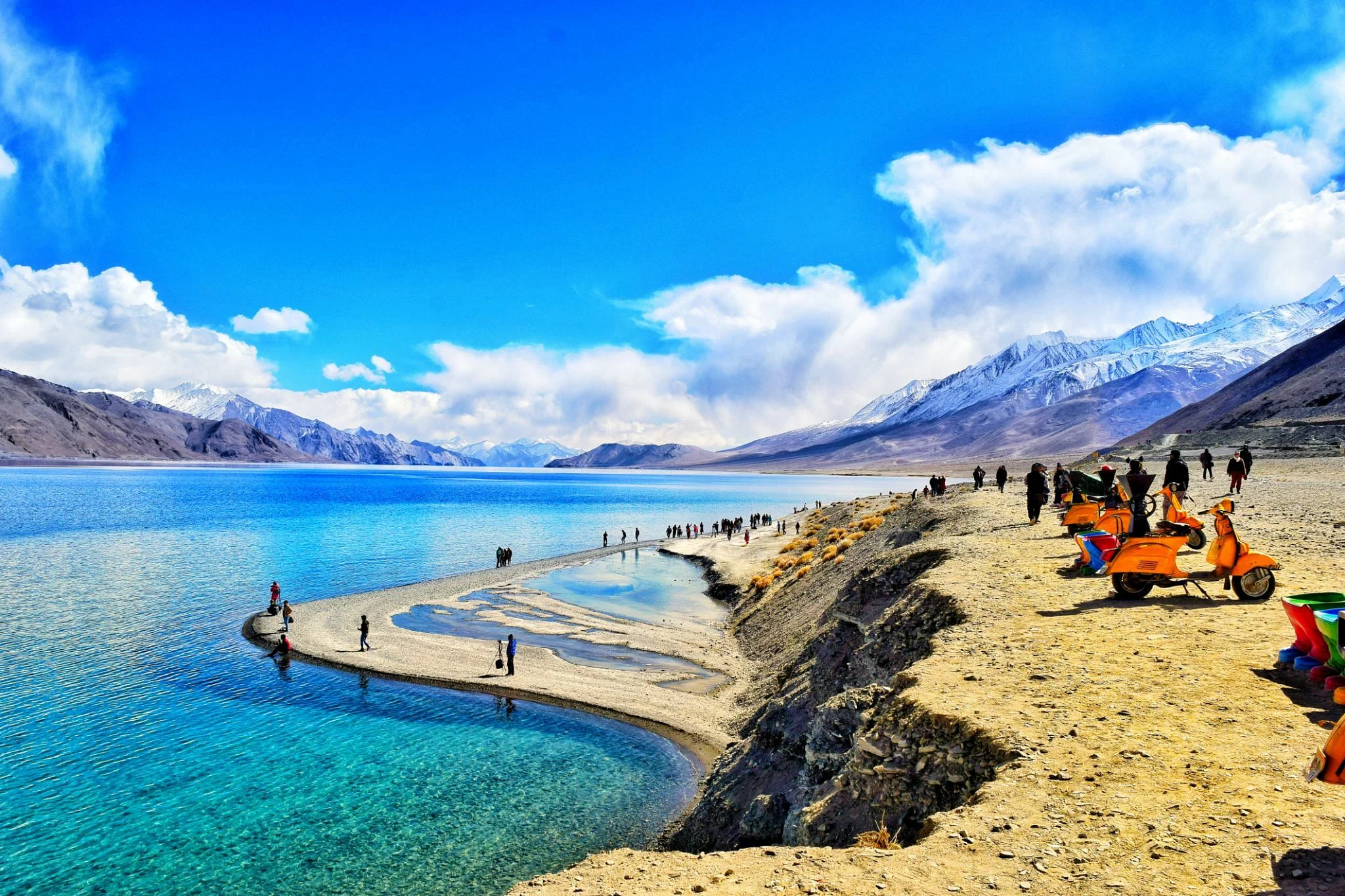
- The Lake: Pangong Tso is an endorheic (landlocked) high-altitude saltwater lake, globally famous for its mesmerizing blue color that shimmers and changes shades throughout the day.
- Stay: Overnight camping near the lake's shores is highly recommended for the unforgettable Pangong Tso sunrise. Note that mobile connectivity is often absent here.
Day 7: Return to Leh and Departure Prep
- Return: Drive back to Leh (a 5-7 hour drive), taking the opportunity to stock up on souvenirs from the Leh Main Bazaar look for authentic Pashmina wool, apricot products, and traditional jewelry.
- Departure: Plan your departure for the following day, feeling revitalized and carrying lifelong memories of your incredible adventure in the Land of High Passes.
Top Things to Do & Activities in Leh Ladakh
Discover a world of unforgettable experiences and top activities at this destination! Whether you’re seeking adventure, cultural immersion, relaxation, or family fun, find the best things to do—from sightseeing and outdoor adventures to culinary delights, spiritual journeys, and local events. Enjoy every moment and make your trip truly memorable!
Popular City in Leh Ladakh
Explore our selection of popular packages in Leh Ladakh. Whether you're looking for a relaxing getaway, a family-friendly trip, or a solo adventure, we have the perfect package for you. Book now and experience the best of Leh Ladakh like never before!