Discover Amazing Jodhpur
Discover the mesmerizing Blue City, where majestic forts, opulent palaces, and vibrant bazaars blend with desert landscapes. Experience royal heritage, thrilling adventures, and authentic Rajasthani culture in this captivating destination.
About This Destination
Jodhpur, the second-largest city in Rajasthan, is a destination instantly recognizable by its mesmerizing, sky-blue painted houses that contrast sharply with the stark landscape of the Thar Desert. Nicknamed the "Blue City" and the "Sun City" (for its perpetually bright, sunny weather), Jodhpur is steeped in a rich history defined by fierce Rajput pride, magnificent architecture, and a vibrant cultural legacy.
This guide provides a structured, helpful roadmap for planning your trip, ensuring you experience the best of Jodhpur’s majestic forts, labyrinthine old city lanes, and contemporary royal living, giving you the high-value information you need without getting lost in the details or the winding alleys of the old city.
History and the Legend of the Color
The Founding of the Kingdom
The city of Jodhpur was founded in 1459 CE by Rao Jodha, a Rathore Rajput chief. He was the head of the Rathore clan, who were historically based in Mandore (the former capital, located just 9 km north of Jodhpur). Rao Jodha deemed the Mandore fort to be too vulnerable and decided to build an impregnable fortress on a massive, isolated hill called Bhakurcheeria (the Mountain of Birds) for the safety of his kingdom. This led to the construction of the colossal Mehrangarh Fort, and the surrounding area soon grew into the capital city of the vast Marwar kingdom.
Jodhpur's strategic position on the Delhi-Gujarat trade route, which transported opium, copper, silk, sandals, and coffee, allowed it to flourish, making it a powerful and wealthy princely state under the British Raj.
Why is Jodhpur Painted Blue?
The sight of the old city, a sea of azure nestled beneath the ochre walls of the fort, is one of the most compelling reasons people search for and visit Jodhpur. The reason for the unique blue hue is multi-layered, evolving over centuries:
- The Brahmin Connection: The most persistent theory suggests that the color was first used by the Brahmins (the priestly caste in India) to paint their houses. It served as a mark of distinction, symbolizing their high social status and setting their residences apart from those of lower-caste communities.
- Thermal Comfort (The Sun City Effect): The most practical and logical reason is climate control. Given Jodhpur’s proximity to the Thar Desert and the scorching temperatures (hence the nickname Sun City), blue is believed to be a good reflector of sunlight, helping to keep the interiors of the houses significantly cooler than houses painted in lighter or darker shades.
- Insect Repellent: Another common explanation is that the blue pigment (historically made by mixing copper sulphate and limestone) acts as a natural repellent against termites and other insects that plague houses in the hot, semi-arid climate.
- Symbolism of Lord Shiva: Many devotees associate the color with Lord Shiva, whose throat is said to have turned blue after drinking poison during the Samudra Manthan (churning of the cosmic ocean) to save the world. Painting houses blue is seen as a way of invoking divine protection and blessing.
While the exact origin remains a romantic mystery, the practical and cultural reasons have ensured the beautiful tradition of the Blue City has endured.
How to Reach Jodhpur Seamlessly
Jodhpur is a significant administrative and tourism hub, offering excellent connectivity by all major modes of transport. Getting to the Blue City of India is straightforward from any major metropolis.
By Air (Nearest Airport)
- Jodhpur Airport (JDH): Jodhpur has its own domestic airport. It is a civil enclave airport sharing its airside with the Indian Air Force.
- Connectivity: JDH is well-connected with regular flights to and from major Indian metros, including Delhi, Mumbai, Jaipur, and Bangalore, making it the quickest way to arrive.
- Airport to City: The airport is incredibly close, located only about 5 kilometers from the main city center and about 8 km from Mehrangarh Fort. A pre-paid taxi or auto-rickshaw ride to your hotel takes just 15 to 20 minutes.
By Rail (Major Railway Station)
- Jodhpur Junction Railway Station (JU): This is a major hub on the Indian Railways network and is one of the easiest ways to reach Jodhpur.
- Connectivity: Jodhpur Junction offers extensive connectivity across India with daily trains to Delhi, Mumbai, Kolkata, Chennai, Jaipur, and Ahmedabad. Trains are a popular choice for visitors undertaking a long Rajasthan heritage tour.
- Luxury Rail: The city is also a stop for the luxurious Palace on Wheels and Maharajas' Express, catering to high-end travelers seeking a royal experience.
By Road (Inter-City Highways)
Jodhpur is centrally located in Rajasthan and is a key junction on the road network, making it perfect for those driving from Jaipur to Jodhpur or linking up with Udaipur and Jaisalmer.
- Bus Services: The Rajasthan State Road Transport Corporation (RSRTC) operates regular, comfortable bus services (including Volvo and AC coaches) connecting Jodhpur to cities like Jaipur (approx. 330 km), Udaipur (approx. 250 km), Jaisalmer (approx. 280 km), and Ajmer.
- Driving: The roads (National Highways 62 and 125) are in excellent condition, allowing for smooth, quick transit via private taxi or self-drive cars for a memorable Rajasthan road trip.
Best Time to Visit Jodhpur:
The climate of Jodhpur, situated on the edge of the Thar Desert, is characterized by its extremes. To maximize your sightseeing and comfort, choosing the best time to visit the Blue City is essential.
- Peak Season (Best Time): October to March.
- Vibe: This is the ideal time. The weather is cool and pleasant, with daytime temperatures ranging from 10 °C to 25 °C. The cool nights and sunny days are perfect for exploring the massive Mehrangarh Fort and wandering the narrow blue lanes of the old city. This is the most recommended time for a Jodhpur travel itinerary.
- Highlight: The Rajasthan International Folk Festival (RIFF) at Mehrangarh Fort and the annual Marwar Festival are often held during this pleasant period.
- Shoulder Season (Monsoon): July to September.
- Vibe: The city receives minimal rainfall, but the temperature drops, and the air is slightly humid. The hills surrounding the fort turn green for a short period, offering a unique photographic opportunity. Crowds are lower, and hotel discounts are available.
- Summer Season (Avoid the Heat): April to June.
- Vibe: This season is characterized by intense, dry heat, with temperatures often soaring above 40 °C. Sightseeing, particularly in the open sun at the fort, can be challenging. Only choose this time if you are comfortable with high temperatures and plan all outdoor activities for early mornings or late evenings.
Things To Do in Jodhpur: A 48-Hour Heritage Itinerary
Jodhpur’s charm lies in its royal heritage and the contrast between the imposing fort and the humble, yet colorful, houses beneath it. A good 2-day Jodhpur trip plan covers the highlights perfectly.
Day 1: The Giants of the City
- Morning (The Unconquered Fort): Mehrangarh Fort.
- Start your day early at the Mehrangarh Fort, towering 400 feet above the city. This architectural masterpiece is still run by the royal family and houses incredible palaces like the Moti Mahal (Pearl Palace), Phool Mahal (Flower Palace), and Sheesh Mahal (Mirror Palace), all filled with fascinating royal artifacts, palanquins, and weaponry. Allow at least 3-4 hours to explore the museum and walk along the massive ramparts for breathtaking panoramic views of the Blue City.
- Adventure Tip: Consider the Flying Fox Jodhpur (zip-lining) activity that takes you over the fort walls and surrounding Rao Jodha Desert Rock Park for an unforgettable adrenaline rush and a different perspective of the landscape.
- Mid-day (The Marble Mausoleum): Jaswant Thada.
- Located a short distance from the fort, the serene Jaswant Thada is a stunning 19th-century white marble cenotaph built in honor of Maharaja Jaswant Singh II. Often called the "Taj Mahal of Marwar," its finely carved sheets of marble glow beautifully in the sunlight. The peaceful gardens and lake offer a perfect respite.
- Afternoon (Royal Grandeur): Umaid Bhawan Palace.
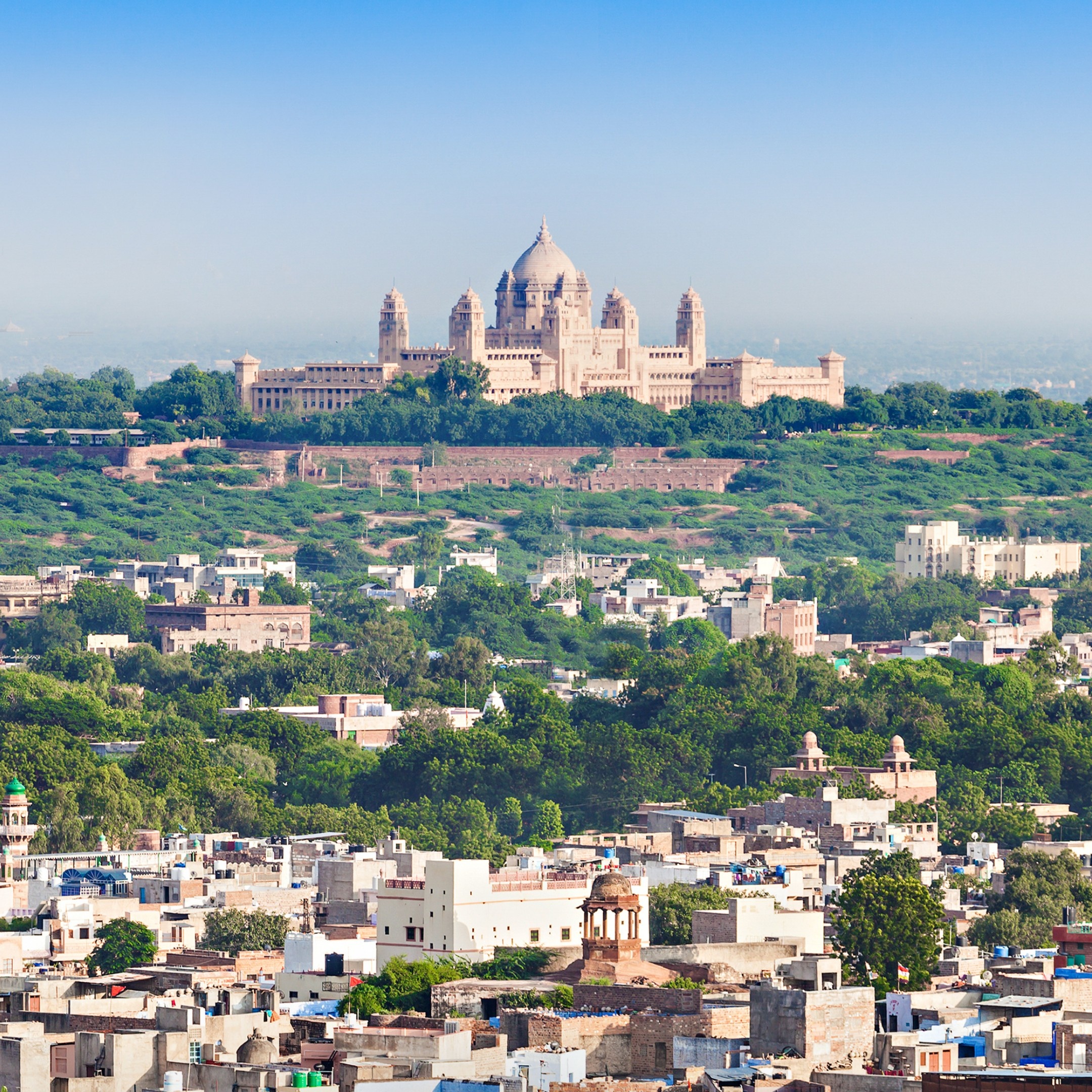
- Visit the spectacular Umaid Bhawan Palace, one of the largest private residences in the world. Built by Maharaja Umaid Singh to provide employment during a famine, this massive palace is a blend of Indo-Saracenic, Classical Revival, and Western Art Deco styles. It is currently divided into three sections: a royal residence, a luxury Taj hotel, and a Palace Museum that displays royal memorabilia, a fascinating collection of clocks, and vintage cars.
Day 2: The Old City and Offbeat Discoveries
- Morning (The Blue City Walk): Ghanta Ghar and Sadar Bazaar.
- Head to the heart of the old city, the Ghanta Ghar (Clock Tower). The vibrant tower stands as the central landmark around the bustling Sardar Market. This is the perfect spot for street photography and shopping for authentic Rajasthani textiles, handicrafts, spices, and the famous Jodhpur silver jewelry.
- The Blue Lanes: Start a self-guided or organized walking tour into the maze of indigo houses beneath the fort. This is the best way to immerse yourself in the local culture, interact with residents, and capture those iconic Jodhpur blue house photographs.
- Late Morning (The Stepwell and Café Culture): Toorji Ka Jhalra.
- Discover the recently restored Toorji Ka Jhalra, a magnificently carved 18th-century stepwell. Surrounded by modern cafes and boutique shops, it has become a popular social and photographic hub. Spend some time watching local life unfold around this architectural marvel.
- Afternoon (Ancient Ruins and Retreat): Mandore Gardens.
- Take a short drive to the quieter Mandore Gardens, the former capital of Marwar. This complex features beautiful red sandstone cenotaphs (Chhatris) of Jodhpur rulers, ancient temples, a Hall of Heroes dedicated to Rajput legends, and lush gardens, offering a peaceful contrast to the bustling city center.
- Evening (Culinary and Cultural Finale):
- Rooftop Dinner: End your trip with a signature Jodhpur experience: a rooftop dinner at one of the many restaurants in the old city, offering a mesmerizing, illuminated view of the Mehrangarh Fort at night.
- Local Delicacies: Don’t leave without sampling local culinary favorites like the Mirchi Bada (spicy chili fritter), Pyaaz Kachori (onion pastry), and the famous sweet treat, Mawa Kachori.
Top Things to Do & Activities in Jodhpur
Discover a world of unforgettable experiences and top activities at this destination! Whether you’re seeking adventure, cultural immersion, relaxation, or family fun, find the best things to do—from sightseeing and outdoor adventures to culinary delights, spiritual journeys, and local events. Enjoy every moment and make your trip truly memorable!