Discover Amazing Haridwar
Haridwar is an ancient city in Uttarakhand, known for its holy river Ganges, sacred ghats, and vibrant festivals like the Kumbh Mela. A major Hindu pilgrimage destination, it attracts millions for its spiritual ambiance, Ganga Aarti at Har Ki Pauri, and rich cultural heritage.
About This Destination
Haridwar literally translating to the "Gateway to God" is one of India’s seven holiest cities (Sapta Puris), a place where the majestic River Ganga (Ganges) dramatically leaves the constraints of the Himalayan mountains and gracefully enters the North Indian plains. This pivotal moment, both geographically and spiritually, has cemented Haridwar's role as a fundamental pilgrimage site for Hindus worldwide for millennia.
The city is a vibrant, chaotic, and intensely spiritual immersion. It’s defined by the continuous, mesmerizing flow of the sacred river, the intricate network of ghats (river banks with steps), and the pervasive scent of incense and flowers. Haridwar is not just a destination; it is an experience of unfiltered Indian spiritual life, a place to witness tradition in its most raw and compelling form, culminating every evening in the globally renowned Ganga Aarti. A visit here is a journey into the ancient heart of Hinduism, a profound experience of cleansing and renewal.
Overview:
Haridwar’s essence lies in its connection to the Amrit (nectar of immortality). Legend holds that drops of this nectar fell at four sites, and Haridwar is one of them. This mythological significance elevates every ritual performed here, particularly the holy dip in the Ganga, which is believed to cleanse sins and liberate the soul.
Har Ki Pauri:
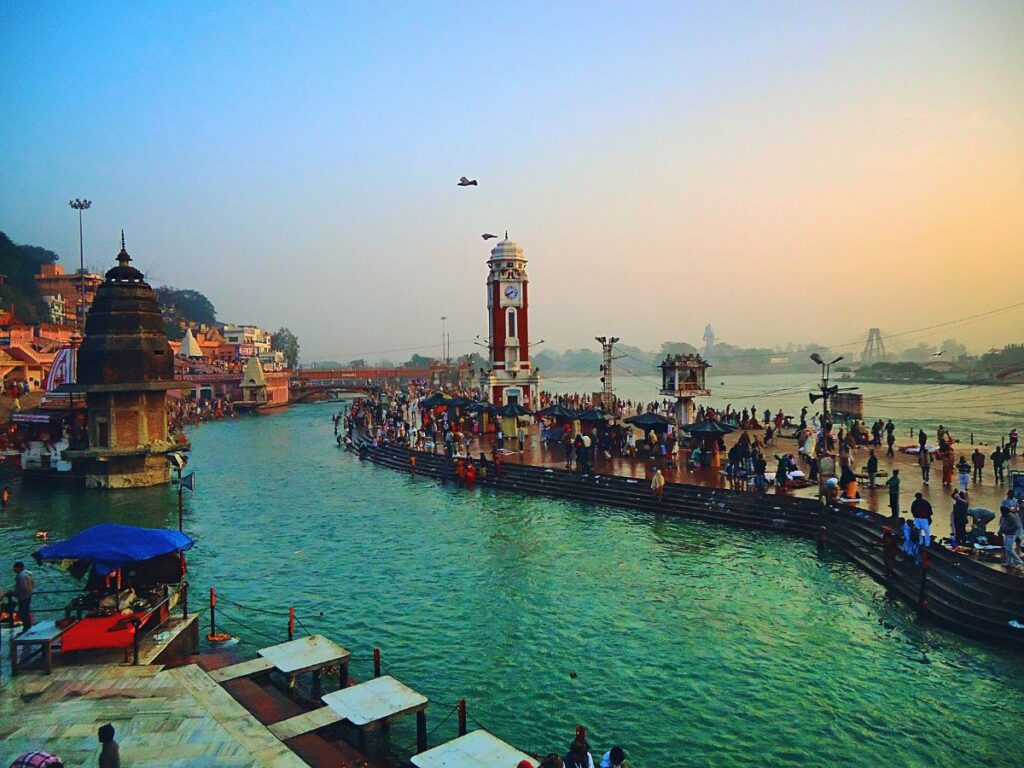
The focal point of Haridwar is Har Ki Pauri, the most revered ghat in the city. Its name, "Footsteps of God," refers to the stone wall believed to bear the footprint of Lord Vishnu.
- The Ganga Aarti Spectacle: Every sunset, Har Ki Pauri transforms into an arena of spiritual ecstasy for the Ganga Aarti. Priests perform a choreographed ritual with giant tiered brass lamps (diyas), accompanied by the rhythmic tolling of temple bells, the blowing of conch shells, and the chanting of hymns. Thousands of small lamps and flowers are floated down the river, creating a mesmerizing, flickering carpet on the water. This mesmeric sight is the city's signature experience and a powerful testament to Hindu devotion.
- Brahmakund: The particular section of the river at Har Ki Pauri is known as Brahmakund, considered the most sanctified spot for the ritualistic holy bath.
A Hub of Wellness and Learning
The region is also a historical center for Ayurvedic wellness and Yoga. Institutions like Patanjali Yogpeeth near the city have revitalized interest in these ancient practices, making Haridwar a magnet for those seeking holistic health and traditional Vedic knowledge systems.
The Siddha Peethas and Ancient Temples
Haridwar is part of the sacred Siddha Peethas Triangle, three ancient temples dedicated to goddesses that are central to the city's spiritual map. Accessing these temples, often located on the Shivalik hills, offers both spiritual reward and fantastic panoramic views of the plains below.
The Siddh Peethas Triangle
- Mansa Devi Temple: Located atop the Bilwa Parvat on the Shivalik range. Mansa Devi, whose name means "Goddess who fulfills desires," is one of the three Siddha Peethas. Visitors can reach the temple either by an uphill trek or via the popular Mansa Devi Udankhatola (ropeway), which provides stunning aerial views.
- Chandi Devi Temple: Situated atop the Neel Parvat, dedicated to Goddess Chandi. Like Mansa Devi, it is one of the Siddha Peethas and is accessible via a challenging trek or a dedicated Chandi Devi ropeway. The temple is linked to the legend of the goddess slaying the demons Chanda and Munda.
- Maya Devi Temple: The third Siddha Peetha, located in the heart of the city, near Har Ki Pauri. This ancient shrine is dedicated to the city’s presiding deity, Goddess Maya Devi, from whom the old name of the city, Mayapuri, is derived. It is considered a Shakti Peetha where the navel and heart of Goddess Sati are believed to have fallen.
Other Essential Shrines
- Daksheshwar Mahadev Temple: Located in the town of Kankhal, just outside central Haridwar. This temple is deeply tied to the myth of Lord Shiva and Goddess Sati, believed to be the spot where King Daksha performed a sacrificial ritual (Yajna), leading to Sati's self-immolation. It’s a site of deep Puranic mythology and a major pilgrimage spot during Maha Shivaratri.
- Bharat Mata Mandir: A unique, eight-story temple dedicated to Mother India (Bharat Mata) rather than a traditional deity. Each floor is dedicated to different themes, including freedom fighters, saints, and the cultural diversity of the nation, offering a powerful display of spiritual patriotism.
How to Reach Haridwar
Haridwar is strategically located and easily accessible by all major modes of transport, serving as the gateway to the upper Himalayas (Char Dham Yatra).
By Air:
- Jolly Grant Airport (DED), Dehradun: This is the nearest domestic airport, located approximately 35–40 kilometers from Haridwar. It is well-connected with regular flights, primarily from Delhi and other major Indian cities.
- Onward Journey: A taxi or private cab from the airport takes about 1 to 1.5 hours to reach Haridwar, making the connection quick and comfortable, especially for senior citizens or families.
By Rail:
- Haridwar Junction Railway Station (HW): The city has a major railway station that is excellently connected to virtually every major city in India, including Delhi, Mumbai, Kolkata, and Chennai, via numerous express and superfast trains (like the Shatabdi Express and Mussoorie Express).
- Convenience: The railway station is centrally located, making trains one of the most popular and affordable ways to arrive.
By Road:
- Road Network: Haridwar is seamlessly connected by National Highway (NH 334/NH 7) to Delhi (approx. 220 km) and other parts of Uttarakhand.
- Bus Services: State transport buses and private Volvos run frequently, especially from Delhi and major cities in North India. The bus stand is conveniently located near the railway station.
Best Time to Visit Haridwar
Haridwar is a year-round destination, though the experience changes dramatically depending on the season and the presence of major festivals.
- Best Weather (October to March): This is the most pleasant season with cool, comfortable weather (average 7 °C to 25 °C). The skies are clear, making the holy dip and evening Aarti enjoyable. This is the ideal time for families and elderly pilgrims seeking a comfortable, unhurried visit.
- Festival and Pilgrimage Peak (July - August): The city is packed during the Kanwar Yatra (July-August, during Shravan month), a time of intense religious fervor but also extreme crowds. The monsoons bring lush greenery but also the risk of heavy rain and increased humidity.
- Summer (April to June): The weather can be hot (up to 40 °C), but the city buzzes with activity as it is a major stop before the Char Dham Yatra. Early morning temple visits and evening walks are advised to avoid the mid-day heat.
- Major Events: The town hosts the world's largest religious gathering, the Kumbh Mela, every 12 years (and the Ardh Kumbh Mela every 6 years), which transforms the city into an epic spiritual spectacle.
Things to Do:
While the Ganga Aarti is the heart of the experience, Haridwar offers a variety of engaging activities that blend culture, nature, and wellness.
- Rajaji National Park Safari: A short drive from Haridwar takes you to the Rajaji National Park, located in the Shivalik foothills. This park is an excellent spot for wildlife safari, famous for its high concentration of elephants, and offers great opportunities for eco-tourism and birdwatching in the Neel Dhara Pakshi Vihar area.
- Ashram Life and Wellness: Spend time at one of the city's renowned ashrams, such as Shantikunj (Gayatri Parivar) or Sapt Rishi Ashram. These centers offer classes in yoga, meditation, and Ayurveda, allowing for a deeper spiritual retreat and contemplation away from the city bustle.
- Local Culinary Exploration: Being a strict vegetarian city, the street food is a unique delight. Be sure to sample the famous Aloo Puri from local stalls, sweet Jalebis, and traditional North Indian sweets like Peda and Rabri in the bustling Moti Bazaar and Bara Bazaar.
- Shopping for Spiritual Souvenirs: The bazaars of Haridwar are perfect for buying religious items: brightly colored glass bangles, intricate brass idols, herbal Ayurvedic medicines, holy books, and sacred beads (rudraksha). The markets themselves are a lively cultural immersion experience.
Top Things to Do & Activities in Haridwar
Discover a world of unforgettable experiences and top activities at this destination! Whether you’re seeking adventure, cultural immersion, relaxation, or family fun, find the best things to do—from sightseeing and outdoor adventures to culinary delights, spiritual journeys, and local events. Enjoy every moment and make your trip truly memorable!