Discover Amazing Rudraprayag
Confluence town in Uttarakhand, famous for its meeting of Alaknanda and Mandakini rivers, ancient temples, and gateway to Kedarnath.
About This Destination
Rudraprayag, nestled at the sacred confluence (Prayag) of the Alaknanda and Mandakini rivers in Uttarakhand, is a town steeped in both profound spiritual significance and high-octane Himalayan adventure. Named after Lord Shiva (Rudra), who is said to have appeared here to bless the celestial sage Narada, the town is one of the five major confluences (Panch Prayag) that grace the banks of the Alaknanda. This convergence point is not just a geographical landmark; it is the spiritual gateway to the twin shrines of Kedarnath and Badrinath, making it an essential hub for the Char Dham Yatra.
Beyond its role as a pilgrimage stop, Rudraprayag is the essential base for exploring the deep spiritual and natural treasures hidden in the Mandakini Valley, from ancient temples that defy the ravages of time to meadows that shimmer under the Himalayan sun. This content delves into the soul of Rudraprayag, a place where the churning of sacred rivers mirrors the confluence of history and resilient Garhwali culture.
Overview:
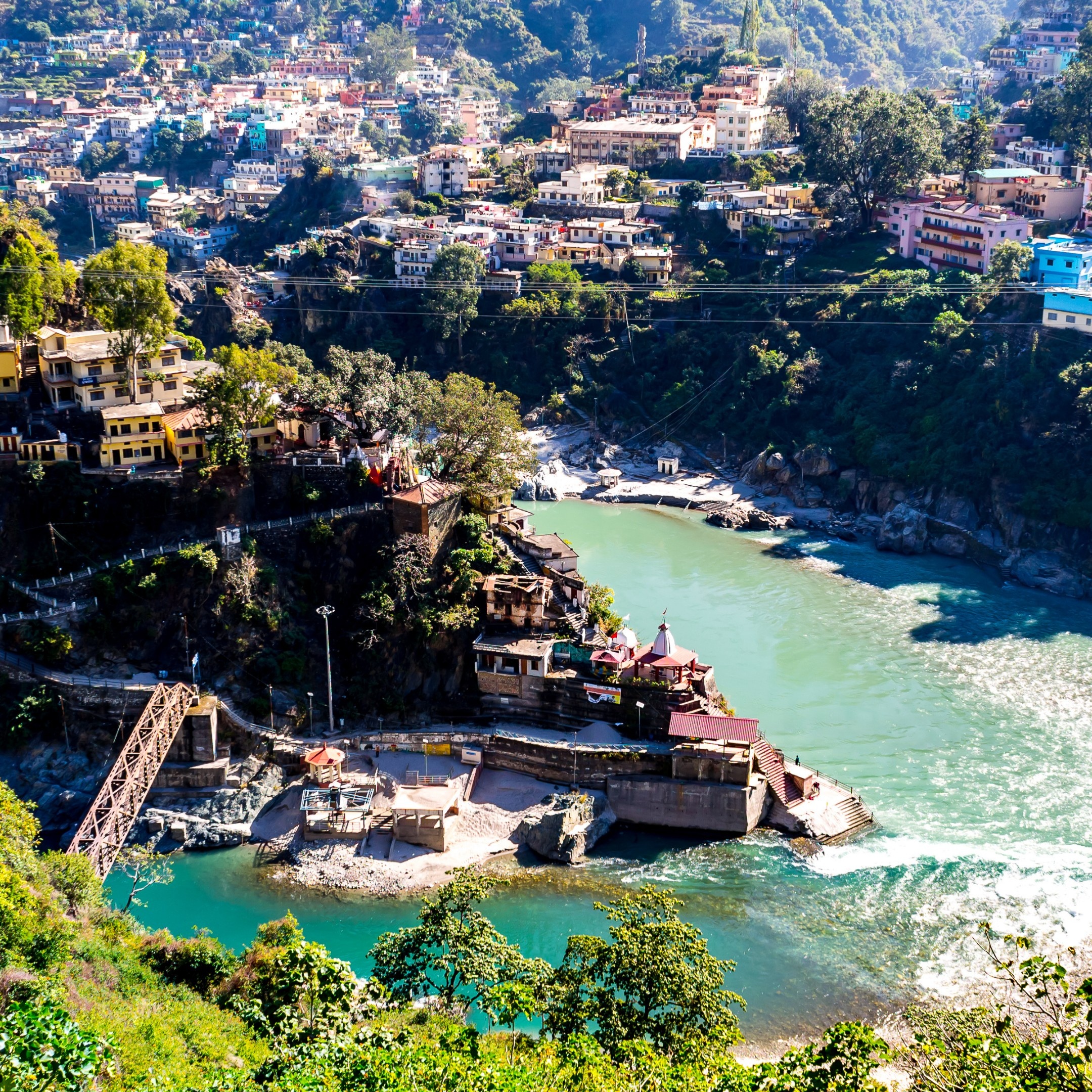
The defining feature of Rudraprayag is the visually dramatic Sangam (confluence), where the calm, jade-green waters of the Alaknanda meet the forceful, silt-laden waters of the Mandakini. Observing this natural phenomenon is a powerful experience that underlies the town's spiritual name.
The Heart of Garhwal Pilgrimage
Rudraprayag sits strategically at the point where the roads diverge towards the two primary Dhamas: the route along the Mandakini leads to Kedarnath, and the route along the Alaknanda continues to Badrinath. This dual role ensures a continuous stream of spiritual seekers and gives the town a vital, dynamic energy.
- Rudraprayag Temple: Located right at the confluence, the main Rudraprayag Temple is dedicated to Lord Shiva in his Rudra form. It is the primary site for local worship and the spot where pilgrims traditionally pause for offerings and meditation before continuing their arduous journeys to the higher shrines. This is a foundational element of Hindu spiritual practice in the region.
- Garhwali Resilience: The town and the surrounding Mandakini Valley are home to resilient Garhwali communities. Life here is organized around the harsh mountain seasons and the cyclical flow of pilgrimage. Engaging with local eateries and markets offers insight into the simple, steadfast nature of the indigenous mountain culture.
Temples to explore in rudraprayag
The Rudraprayag district is a repository of ancient, significant temples, including two of the famous Panch Kedar shrines, making it one of the holiest regions in the Himalayas.
The Winter Seat and The Highest Shiva Temple
- Ukhimath (The Winter Seat of Kedarnath): Located about 40 kilometers from Rudraprayag, Ukhimath serves as the winter abode of Lord Kedarnath. During the six months when the Kedarnath temple is closed due to heavy snow, the doli (palanquin) of the deity is moved here to the Omkareshwar Temple. This ritualistic migration is a cornerstone of the Garhwal religious tradition, ensuring continuous worship. The town itself is serene and offers stunning views of the Kedarnath-Chaukhamba range.
- Tungnath Temple (The Highest Kedar): This temple is an essential part of the Panch Kedar circuit and is renowned as the highest Shiva temple in the world, sitting at an altitude of 3,680 meters. The base for the trek to Tungnath is Chopta (accessible from Rudraprayag).
- The Trek: The 3.5-kilometer trek from Chopta is relatively short and accessible, leading through stunning Himalayan alpine meadows (Bugyals) and rhododendron forests. It offers one of the most rewarding soft adventure treks in Uttarakhand, culminating in a spectacular 360-degree panoramic view from the adjacent Chandrashila Peak.
Other Significant Shrines
- Koteshwar Mahadev Temple: Located just 3 kilometers from Rudraprayag town, this cave temple is situated on the banks of the Alaknanda. It is dedicated to Lord Shiva and is unique for its naturally formed Shiva lingams within the cave. Its accessibility makes it a popular spot for quiet worship.
- Kartik Swami Temple: Dedicated to Lord Shiva's elder son, Kartikeya, this temple sits atop a ridge (3,048 m) and is accessible via a steep trek from the Kanakchauri village (near Rudraprayag). It is famous for its breathtaking sunrise and sunset views over the vast Himalayan panorama, making it a spectacular spot for offbeat photography tours.
Rudraprayag’s location makes it a hub not just for spiritual travel but also for exploring the natural wilderness of the Mandakini and Alaknanda valleys.
Water Adventure and River Sports
- River Rafting: The confluence of the Mandakini and Alaknanda creates powerful rapids, making the area between Rudraprayag and Rishikesh a prime stretch for river rafting and kayaking. The stretch near Rudraprayag offers challenging rapids perfect for Garhwal adventure tourism seekers.
- Riverside Camping: Numerous operators offer riverside camping facilities along the Alaknanda, providing an immersive nature retreat with the continuous, soothing sound of the flowing water.
The Meadows of Chopta and Deoriatal
- Chopta: Serving as the base for the Tungnath trek, Chopta is known as the "Mini Switzerland of India" for its vast, rolling bugyals (alpine meadows) framed by towering peaks. This area is excellent for eco-tourism and birdwatching and is accessible by road from Rudraprayag.
- Deoriatal Trek: A short, beautiful trek from Sari Village (near Ukhimath) leads to the pristine Deoriatal Lake. This lake is famous for offering a crystal-clear reflection of the Chaukhamba peak, providing an unparalleled spot for Himalayan nature walks and a tranquil overnight camping experience.
How to Reach the Confluence
As a vital point on the NH7, Rudraprayag is easily accessible, relying on the same major hubs as the rest of the Garhwal region.
- By Air: The most convenient airport is Jolly Grant Airport (DED), Dehradun, located approximately 180 kilometers away. The road journey from the airport takes about 6 to 7 hours, passing through Rishikesh and Devprayag.
- By Rail: The nearest major railhead is Rishikesh Railway Station (RKSH), about 140 kilometers away. Rishikesh is well-connected to Delhi and other major cities. From Rishikesh, the rest of the journey must be completed by road.
- By Road: Rudraprayag is directly on the major National Highway and is connected by frequent state-run buses and private/shared taxis from Rishikesh, Haridwar, Dehradun, and other Char Dham staging points like Srinagar and Devprayag. The road journey is highly scenic but requires careful navigation due to winding mountain terrain.
Best Time to Visit Rudraprayag
The region is highly seasonal, defined by the access to the high-altitude temples and the weather.
- Peak Season (May to June): This is the best time for pilgrimage and comfortable travel. The weather is cool and pleasant (average 15 °C to 30 °C), ideal for trekking and general sightseeing before the monsoon.
- The Golden Window (September to November): Post-monsoon, the skies are clear, making it the best time for unobstructed Himalayan views and serious adventure tourism. The lushness remains, but the trails are dry enough for comfortable trekking to Tungnath and Deoriatal.
- Winter (December to March): The town itself is cold but accessible, serving as the spiritual hub for the Badrinath deity. This is the time to witness the Ukhimath winter rituals and explore lower-altitude sites. Heavy snow may close the roads to higher areas like Chopta.
- Monsoon (July to August): Heavy rain increases the risk of landslides on the mountain highways. While the waterfalls are spectacular, travel can be unpredictable and is only recommended for solitude travel seekers with flexible itineraries.
Top Things to Do & Activities in Rudraprayag
Discover a world of unforgettable experiences and top activities at this destination! Whether you’re seeking adventure, cultural immersion, relaxation, or family fun, find the best things to do—from sightseeing and outdoor adventures to culinary delights, spiritual journeys, and local events. Enjoy every moment and make your trip truly memorable!