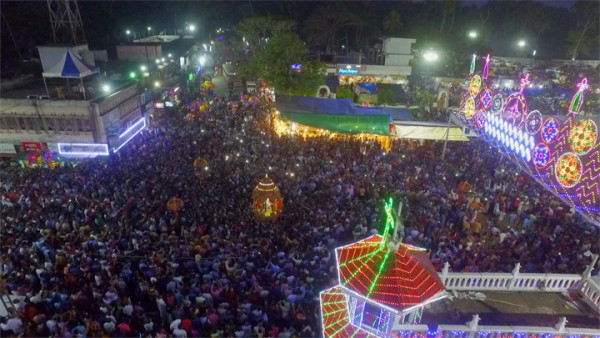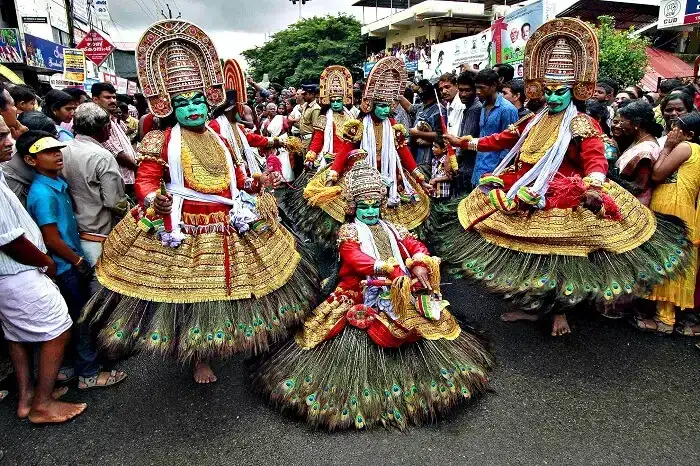
Kerala Tour Package, known as God's Own Country, is a land where culture and natural beauty coalesce. Its calendar is punctuated by a rich tapestry of festivals, each a vibrant expression of the state's deeply rooted traditions, agricultural cycles, religious harmony, and royal history. These celebrations are far more than mere holidays; they are elaborate social events characterized by spectacular temple rituals, unique art forms, grand processions, and community feasting.
To truly understand Kerala is to witness its festivals. This content explores ten of the most significant celebrations, offering detailed insights into their history, customs, and what a visitor can expect, ensuring a genuine and enriching perspective.
Onam: The State Festival and Harvest Celebration
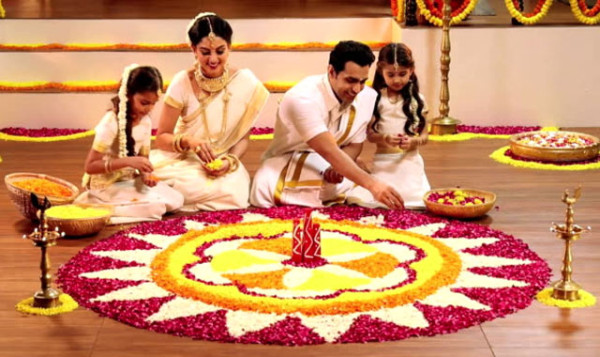
Onam is the most important festival in Kerala, celebrated across all religious and community lines, making it the official state festival. It is a celebration of the annual harvest and commemorates the mythical homecoming of the righteous and beloved King Mahabali, whose reign is said to have been a golden era of equality and prosperity.
The Legend and Significance
The belief is that the Asura (demon) king Mahabali was so powerful and popular that the gods grew jealous. Lord Vishnu, in the guise of Vamana (a dwarf Brahmin), tricked Mahabali into giving him all the land he could cover in three steps. After covering the earth and the heavens, Vamana had no place left for the third step. To honor his promise, Mahabali offered his own head, and Vamana pushed him down to the netherworld (Patala). However, impressed by Mahabali's benevolence, Vishnu granted him a boon: to visit his subjects once a year. Onam marks this annual visit.
Key Rituals and Attractions
- Pookalam (Flower Carpet): The most distinct visual element. Beginning on Atham (ten days before Onam), families create intricate floral designs (Pookalam) in front of their homes to welcome King Mahabali. The design grows larger and more complex each day.
- Onasadya (The Grand Feast): The culinary climax. On the day of Thiruvonam, a magnificent vegetarian feast consisting of 20 to 30 dishes is served on a banana leaf. Key dishes include Sambar, Avial, four types of Payasam (dessert), and various Pappadams.
- Pulikali (Tiger Dance): A spectacular folk art performed primarily in Thrissur. Men paint their bodies to resemble tigers and hunters and dance to the rhythm of drums, enacting hunting scenes.
- Vallamkali (Snake Boat Race): Massive, elaborate snake boats (like the famous Chundan Vallam) with up to 100 rowers race through the backwaters, especially in Alappuzha, creating a mesmerizing spectacle of coordinated effort and synchronized rowing songs.
Thrissur Pooram: The Mother of All Temple Festivals
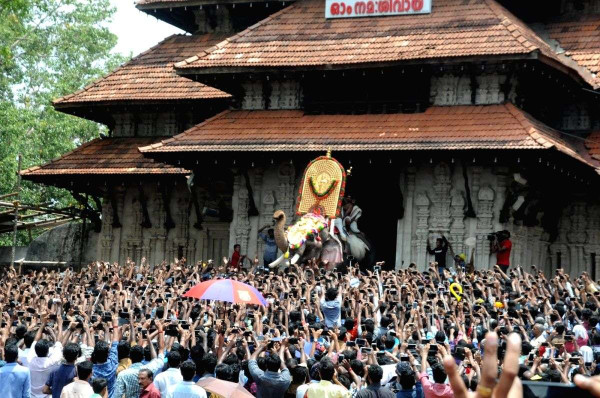
Held at the Vadakkunnathan Temple in Thrissur in April/May, Thrissur Pooram is renowned as the most spectacular, vibrant, and largest temple festival in Kerala. It is not dedicated to a single deity but is an annual competitive gathering of deities from ten surrounding temples (known as Paramekkavu and Thiruvambadi groups).
Historical Context and Grandeur
The festival was institutionalized in the late 18th century by Shakthan Thampuran, the Maharaja of Cochin, to unify the temples of his kingdom. He merged several smaller festivals into one gigantic annual celebration.
Key Rituals and Attractions
- Kudamattom (Umbrella Display): The defining moment of the Pooram. Hundreds of decorated elephants from the competing groups stand facing each other, and their riders engage in a breathtaking, rhythmic exchange of colorful, sequined ceremonial umbrellas (muthukuda). This display of artistry and one-upmanship is watched by millions.
- Elephant Parade: Over 50 caparisoned elephants, decorated with gold-plated headgear (Nettipattom), bells, and ornaments, participate in the procession, creating an unforgettable sensory experience.
- Ilanjithara Melam: A phenomenal assembly of percussionists (up to 250 artists) performing outside the temple, featuring traditional instruments like the Chenda, Kurumkuzhal, Kombu, and Elathalam. The synchronized drumming reaches a crescendo that resonates through the entire city.
- Fireworks Display: The Pooram concludes with a breathtakingly competitive display of fireworks (Vedikkettu), known for their unique noise, color, and grandeur.
Vishu: The Astronomical New Year
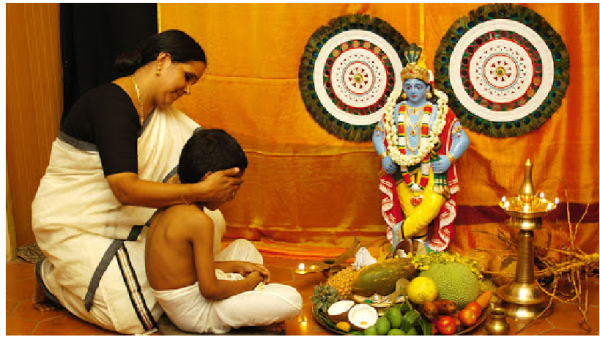
Vishu marks the astronomical New Year in Kerala and is celebrated in April (usually April 14th). It is a festival of hope, prosperity, and the anticipation of a good harvest, symbolizing the start of the summer season.
The Ritual of Prosperity
The central theme is the Vishukkani, which translates to "the first thing seen on Vishu." This ritual is carefully arranged the night before by the senior female member of the family.
- Vishukkani Arrangement: The Kani is a sacred arrangement in a large vessel (Uruli) containing auspicious items: rice, fruits (especially golden cucumbers), vegetables, betel leaves, money, a mirror (valkannadi), a gold coin, and the sacred Kanikonna flowers (Cassia fistula), which symbolize the golden vision of the New Year.
- The First Sight: Family members, especially children, are blindfolded early on Vishu morning and led to the room to open their eyes and witness the Vishukkani first. The belief is that seeing this vision of prosperity first will ensure a fruitful year ahead.
- Vishu Kaineettam: Elders gift small amounts of money (Kaineettam) to the younger family members and servants as a blessing for wealth in the coming year.
Theyyam Festival: The Dance of the Gods
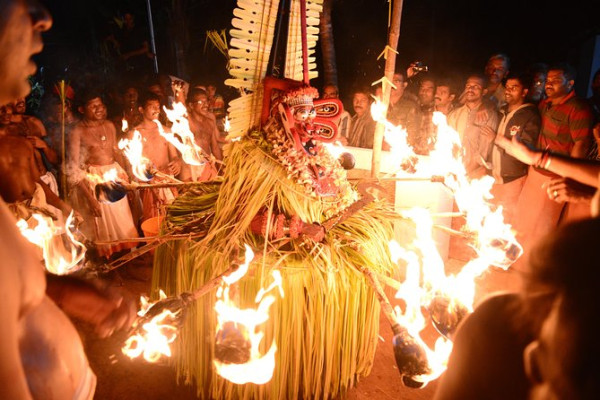
Theyyam is a spectacular, ancient, and highly ritualistic performing art form endemic to the Malabar region (Northern Kerala). It is not a singular festival but a season (from October to May) when various Theyyam performances take place at local temples (Kavu) and ancestral homes.
The Essence of Theyyam
Theyyam involves the ritualistic "possession" of a male artist (Kolam) by a god or goddess. The performer, through rigorous rituals, meditation, and elaborate, hours-long make-up and costume application, transforms into a divine being (Theyyam).
- The Transformation: The costumes and headgear (Mudi) are enormous, intricate, and unique to the specific deity being invoked. The makeup is highly stylized and takes hours to complete.
- The Performance: The Theyyam dances to intense percussion rhythms and narrates the stories, myths, and legends of the specific deity. Crucially, the devotees believe they are speaking directly to the god. The Theyyam offers prophecies, blessings, and sometimes resolves disputes.
- A Living God: The performance often involves feats of strength, fire walking (e.g., in Puthiya Bhagavathy Theyyam), and intense dramatic action, all witnessed by captivated villagers who view the performer with reverence.
Attukal Pongala: The Largest Congregation of Women
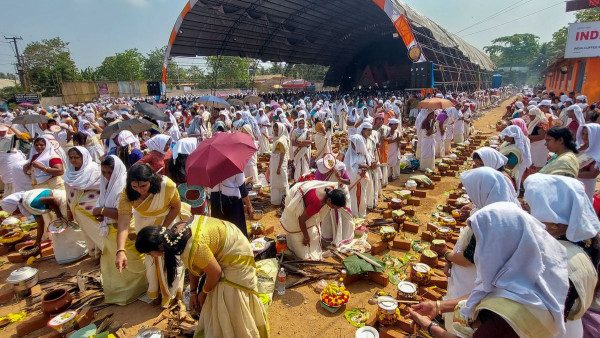
The Attukal Pongala is an annual ten-day festival held at the Attukal Bhagavathy Temple near Thiruvananthapuram. The festival's final day sees the largest annual gathering of women in the world for a religious purpose, earning it a Guinness World Record.
The Ritual and Devotion
The Pongala ritual is exclusively performed by women, who gather in a radius of several kilometers around the temple and along city roads, bringing their own portable hearths.
- Pongala Offering: The central ritual involves preparing Pongala (a sweet dish of rice, jaggery, coconut, and ghee) in new earthen pots over an open fire. The offering is dedicated to the presiding deity, Attukalamma (a form of Goddess Parvati/Kannaki).
- The Sacred Fire: The chief priest of the temple ignites the main hearth inside the temple, and this fire is passed from woman to woman, lighting thousands of pots simultaneously.
- Completion: The ritual concludes when the porridge overflows from the pots, symbolizing abundance and the acceptance of the offering by the Goddess.
Aranmula Uthrattathi: The Water Carnival
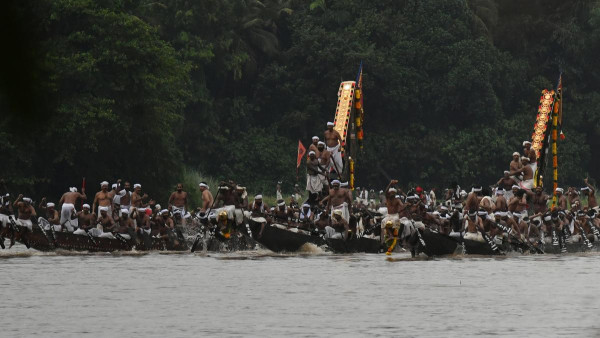
Held in Aranmula (Pathanamthitta district) in August/September, the Aranmula Uthrattathi is Kerala's oldest and most revered boat race, celebrated as a water carnival rather than a fierce competition.
Myth and Tradition
The race is intimately linked to the Sree Parthasarathy Temple (dedicated to Lord Krishna/Parthasarathy). Legend holds that the boat race commemorates the crossing of the river by Lord Krishna, whose image was being carried to the temple.
- The Palliyodams: The participating snake boats, known as Palliyodams, are regarded as the divine vessels of the presiding deity. Each boat represents a Karanma (traditional village) and is treated with utmost reverence, featuring a beautiful golden umbrella and a crew dressed in traditional white mundu (dhoti) and turbans.
- Ritualistic Race: Unlike other boat races, the Aranmula Uthrattathi is primarily a ritualistic procession. The boats row in pairs, chanting the rhythmic boat songs (Vanchipattu), celebrating the deity rather than aiming for first place.
Makaravilakku: The Divine Light of Sabarimala
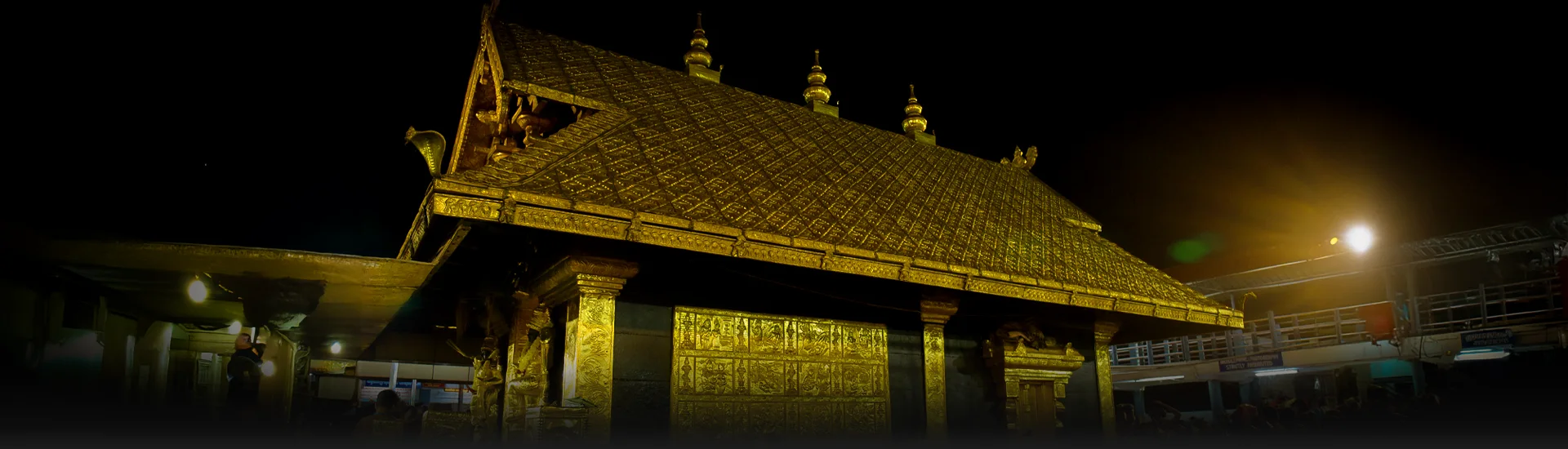
The Makaravilakku is a significant annual festival observed at the Sabarimala Sree Ayyappa Temple in the Western Ghats (Pathanamthitta district). It marks the culmination of the two-month-long pilgrimage season.
The Celestial Phenomenon
The central event occurs on Makar Sankranti (mid-January), coinciding with the transition of the sun into the zodiac sign of Capricorn (Makara).
- The Thiruvabharanam: The day begins with the ceremonial procession of the sacred ornaments (Thiruvabharanam) of Lord Ayyappa from the Pandalam Palace to the hilltop shrine.
- Makaravilakku Sightings: The main ritual involves two phenomena:
- Makarajyothi: The appearance of a star in the sky at the exact moment of Makar Sankranti, believed by devotees to be a celestial sign.
- Makaravilakku: The sighting of a divine light three times on the adjacent hill (Ponnambalamedu) immediately after the aarti (worship) at the temple. This light is revered as a manifestation of the deity, though its origins are now acknowledged by authorities as human-lit but ritually significant.
Nenmara Vallangi Vela: The Festival of Lights and Colors
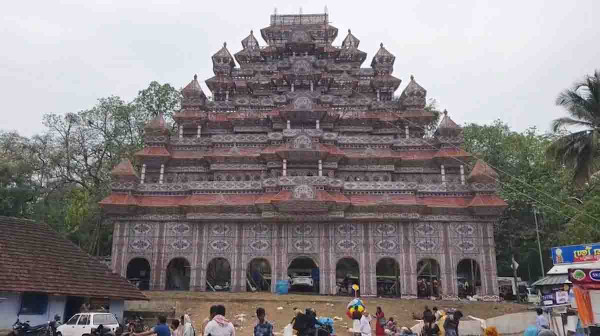
The Nenmara Vallangi Vela is one of the most colourful and visually grand festivals of the Palakkad district, celebrated in April/May by two neighbouring villages, Nenmara and Vallangi, competing to put on the most elaborate display for the Goddess.
The Competitive Display
The festival is a fierce, yet friendly, competition between the two villages, with the Goddess's favour being the ultimate prize.
- Ezhannal (Elephant Procession): Similar to Pooram, both villages parade exquisitely decorated elephants, each vying for the most elaborate and dazzling adornments, including the magnificent Nettipattom.
- Pandhi and Vedikkettu: The competition culminates in a spectacular display of fireworks (Vedikkettu) and traditional performing arts. The entire area is illuminated with intricate light decorations (Pandhi), featuring enormous electric arches and sculptures, transforming the grounds into a magical landscape.
The Festival of the Kettukazhcha
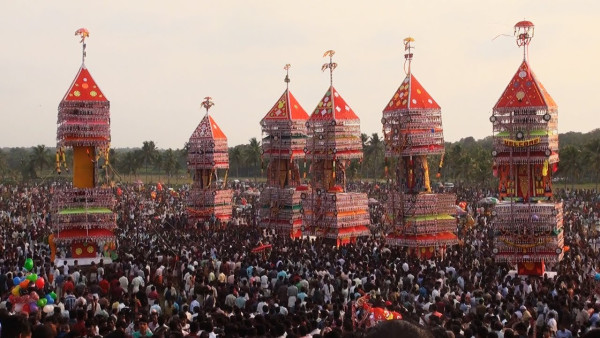
Held at the Chettikulangara Bhagavathy Temple in Alappuzha district, the Kumbha Bharani festival (February/March) is famous for the Kettukazhcha, a breathtaking display of massive, intricately decorated chariots and towering effigies.
The Offering of Structures
The festival is unique because the offerings are massive, temporary architectural structures brought by the residents of the thirteen Karas (local territories) that make up the temple area.
- Kettukazhcha: These structures include towering chariots (some reaching 80-100 feet in height), colossal effigies of horses and bulls, and intricately decorated smaller structures, all built using bamboo, straw, and cloth. The sheer effort and artistry that goes into constructing and manually hauling these enormous structures to the temple ground is astounding.
- Kuthiyottam: A ritualistic dance performed by young boys as a devotion to the Goddess, involving a complex set of ritualistic practices before the final performance.
Christmas in Kerala
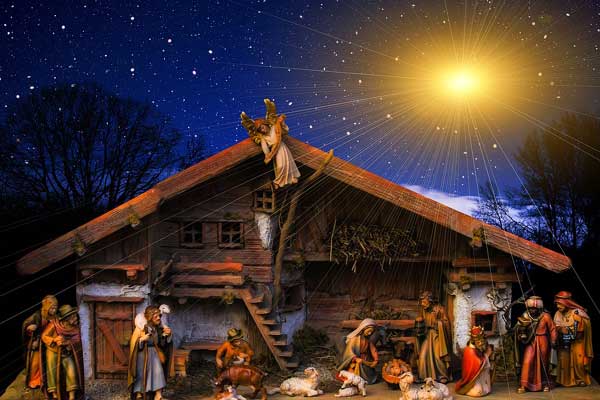
While many Kerala festivals are distinctly indigenous, Christmas is celebrated across the state with a unique intensity and warmth, reflecting the state's large and influential Christian community, particularly in the central districts like Kottayam and Ernakulam.
Unique Kerala Traditions
The festival is observed as a major social and cultural event, blending global customs with local Kerala practices.
- Star Hanging: Every household, Christian or not, adorns its porch with a massive, brightly lit paper or plastic star, beginning in early December. The practice creates a magical, illuminated landscape across towns and villages.
- Pally Perunnal (Church Feast): Around Christmas, many churches celebrate their annual feast days (Perunnal), which involve spectacular processions, fireworks, and community meals, often lasting several days.
- The Christmas Feast: The traditional Kerala Christmas dinner often includes non-vegetarian delicacies unique to the region: Duck Roast, and Appam (pancakes), served alongside rich plum cake. The fusion of traditional dishes with Western festive elements makes it a distinct experience.