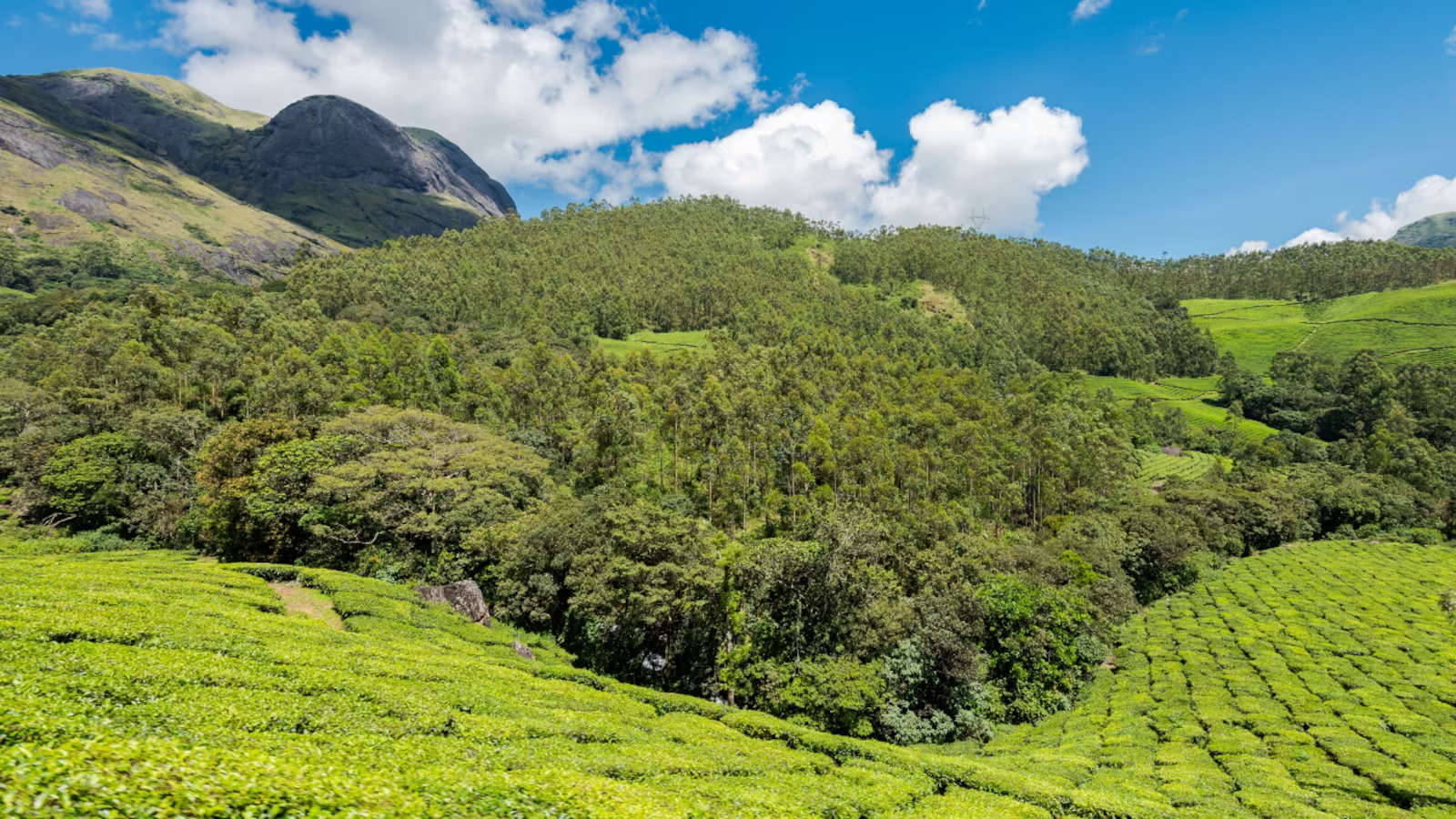
If you have ever dreamt of standing in a place where the clouds literally drift through your hair and the hills look like they’ve been carpeted in velvet, you’re thinking of Eravikulam National Park. Located in the high reaches of Munnar, Kerala, this isn’t your typical "jeep safari" jungle. There are no tigers hiding in the tall grass here, and you won’t find elephants crashing through the trees.
Instead, Eravikulam offers something much more rare and serene. It is a high-altitude land of "shola" forests and rolling grasslands, perched nearly 7,000 feet above sea level. It is famous for being the natural home of the Nilgiri Tahr a mountain goat that you can’t find anywhere else on the planet and for housing Anamudi, the highest peak in South India.
In this guide, I’m going to break down everything you need to know about visiting this park, from the logistics of getting there to the small details that make a trip here actually enjoyable rather than stressful.
Where is Eravikulam National Park Located?
Eravikulam National Park sits in the Idukki district of Kerala, nestled within the Western Ghats. If you are looking at a map, it’s basically the "crown" of Munnar.
The park is about 15 kilometers away from the main Munnar town. Because Munnar is the central hub for all tourism in this region, almost everyone uses it as their base. The park itself is spread over 97 square kilometers, but as a visitor, you only get access to a small, protected portion called Rajamalai.
The beauty of its location is that it acts as a bridge between the tea estates of Munnar and the wild, untouched peaks of the high ranges. When you drive toward the park, you’ll see the landscape shift from neat, manicured rows of tea leaves to the rugged, wild grass of the mountains.
Why Visit Eravikulam National Park?
You might wonder why people flock here when there are so many other hills in Kerala. There are three main reasons:
The Nilgiri Tahr
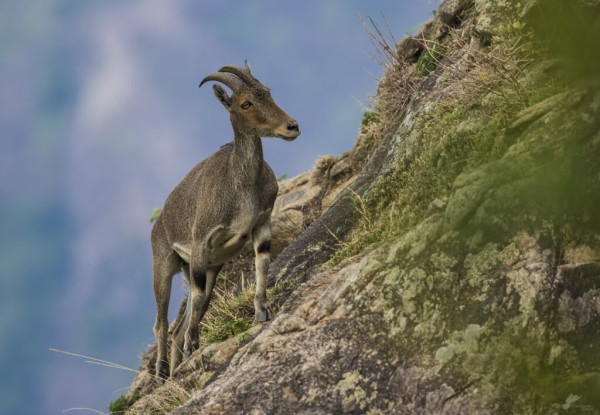
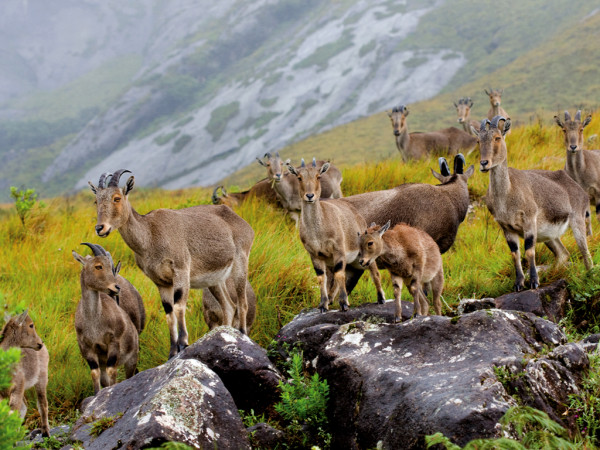
This is the superstar of the park. The Nilgiri Tahr is an endangered mountain goat with short, coarse fur and curved horns. What makes Eravikulam special is that these animals have become quite used to humans. Unlike in other wildlife sanctuaries where you need binoculars to see a speck in the distance, here the Tahr often walk right along the visitor paths. They are calm, beautiful, and a joy to photograph.
The Landscape (The Grasslands)
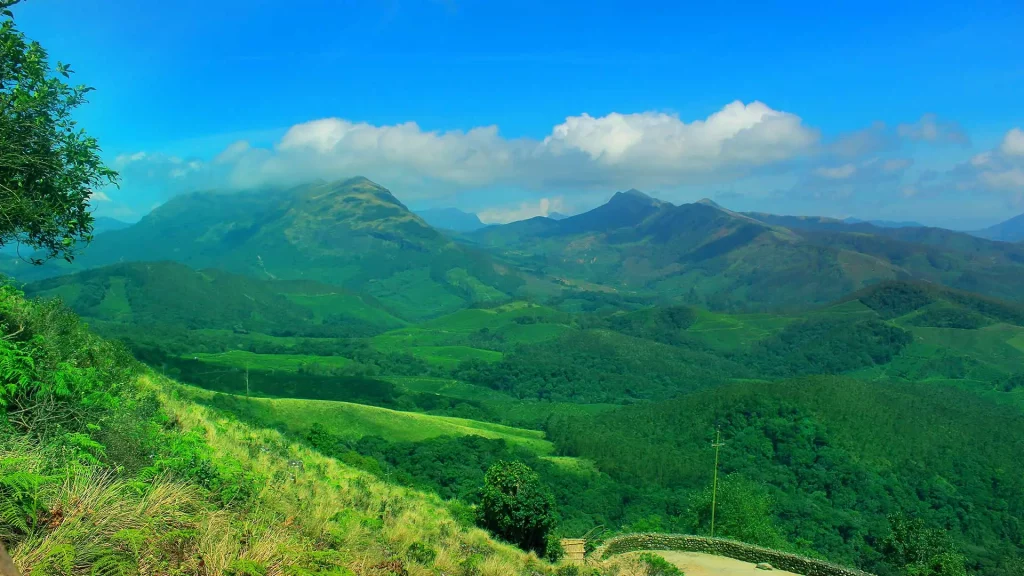
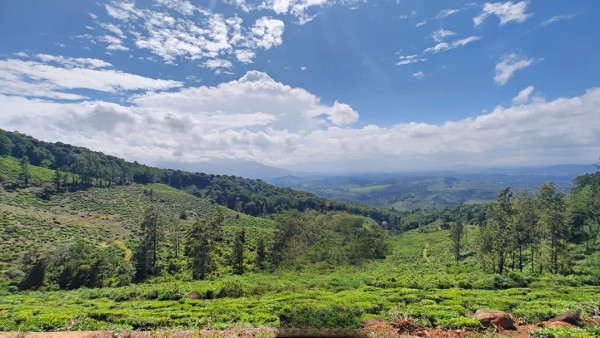
Most of the park is made up of "Montane Grasslands." It looks more like the Scottish Highlands than tropical India. The air is crisp, the wind is cold, and the views of the deep valleys below are dizzying. It’s one of the cleanest, most well-preserved environments you will ever step into.
Anamudi Peak
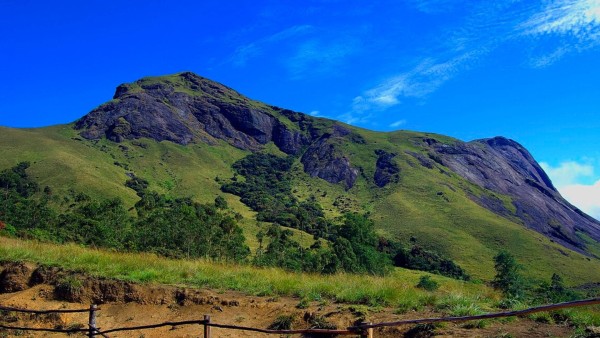
Inside the park stands Anamudi, which rises to 2,695 meters (8,842 feet). While you aren't allowed to trek to the summit anymore (to protect the environment), just being in its shadow is a humbling experience. It’s the highest point in India south of the Himalayas.
Best Time to Visit Eravikulam National Park
The timing of your visit can change your experience from "chilly and clear" to "completely fogged out."
The "Best" Months (September to March)
This is when the weather is most reliable. After the monsoons end in September, the hills are an impossibly bright green. From November to February, it gets quite cold (sometimes dropping to 5°C or lower), but the skies are usually blue and clear, giving you the best views of the valleys.
The Monsoon (June to August)
Kerala gets heavy rain. If you visit during these months, the park is often covered in thick mist. You might not see the peaks or the Tahr, but the atmosphere is incredibly moody and romantic. Just be prepared to get wet.
Important: The Breeding Season Closure
Every year, the park closes for about 30 to 45 days during the calving season of the Nilgiri Tahr. This usually happens between February and March. If you are planning a trip during these months, always check the official forest department website or ask your hotel in Munnar. They close it so the newborn fawns aren't stressed by tourists.
How to Reach Eravikulam National Park
Getting here is fairly straightforward, but there is a specific process you need to follow.
From Munnar Town
Munnar is the gateway. You can take a local bus from the Munnar KSRTC station toward Udumalpet and ask to be dropped at the Eravikulam entrance. Alternatively, you can hire an auto-rickshaw or a private taxi. The drive takes about 30 to 45 minutes depending on traffic.
Nearest Railway Station
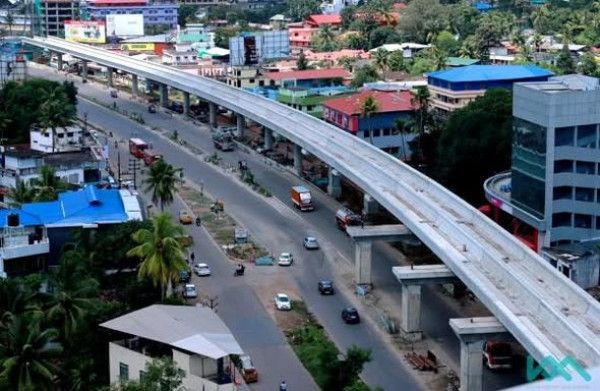
The closest big station is Aluva, about 110 km away. Ernakulam (Kochi) is another major hub about 120 km away. From either station, you’ll need to take a bus or a taxi to Munnar, which is a 4-hour winding mountain drive.
Nearest Airport

Cochin International Airport (COK) is the nearest airport, roughly 110 km from the park. Most travelers fly into Kochi and then take a pre-paid taxi or a bus up to the hills.
The Last-Mile Process
You cannot take your private car or taxi inside the national park. You must park your vehicle at the Forest Department’s parking area near the entrance gate at Rajamalai. From there, the Forest Department operates its own shuttle buses to take you up into the high grasslands. This is done to reduce pollution and noise inside the core habitat.
Entry Tickets, Timings & Rules
Opening Hours
The park usually opens at 7:30 AM and stops entry by 4:00 PM.
Ticket Prices (Approximate)
- Indian Adults: ₹125 – ₹150
- Foreign Nationals: ₹500 – ₹600
- Children: ₹40 – ₹50
- (Note: These prices change periodically, and there is an extra fee for cameras.)
How to Book
I highly recommend booking your tickets online through our kerala tour package, and there another option through forest department official website. There is a daily limit on how many people can enter. If you just show up, you might have to wait in a long queue for 2 hours, or worse, find out the tickets are sold out for the day.
Important Rules
- No Plastic: This is a zero-plastic zone. Don’t bring plastic bags or disposable water bottles if you can help it. If you do, you’ll be asked to leave them or pay a deposit.
- No Smoking/Alcohol: It’s a sacred space for nature.
- Don't Touch the Animals: The Nilgiri Tahr may come close, but please don't try to pet or feed them. They are wild animals, and our food makes them sick.
What You’ll See Inside the Park
Once the shuttle bus drops you off at the top, the real experience begins.
The Rolling Grasslands
As soon as you step off the bus, the sheer scale of the landscape hits you. The mountains look like giant green waves. In the mornings, you’ll see the "Neelakurinji" shrubs (even when not in bloom) and various high-altitude wild flowers.
Spotting the Nilgiri Tahr
Usually, you don’t have to look hard. They often graze right next to the paved walking path. Look for the "Saddlebacks" the older males who have a distinctive silver-grey patch on their backs.
The Shola Forests
In the dips and valleys between the hills, you’ll see clusters of stunted, thick trees. These are Shola forests. They are ancient ecosystems that act like sponges, holding water and feeding the streams that eventually become Kerala's big rivers.
Photography Opportunities
If you’re a photographer, the lighting here is a dream. The way the shadows of the clouds move across the hills provides amazing depth for landscape shots.
Safari & Park Experience
The word "safari" here is a bit different. It’s a two-part journey:
- The Bus Ride: The 15-minute bus ride from the gate to the drop-off point is quite steep and scenic. Sit on the right side of the bus for the best views of the valley as you go up.
- The Walk: Once the bus drops you off, there is a paved road that goes uphill for about 1.5 to 2 kilometers. This is where you walk. You don't have to be a marathon runner to do this, but it is an incline. There are benches along the way if you need to catch your breath.
The entire visit usually takes about 2 to 3 hours. It’s a slow, quiet experience. You walk at your own pace, watch the goats, take photos, and just breathe in the thin, cold air.
Eravikulam During Neelakurinji Bloom
Every 12 years, Eravikulam National Park becomes the most famous place in India. This is because of the Neelakurinji (Strobilanthes kunthiana).
This flower only blooms once every 12 years, covering the entire mountain range in a carpet of purplish-blue. The last major bloom was in 2018, and the next big one is expected around 2030.
During these years, the park is incredibly crowded. People fly in from all over the world just to see the "Blue Mountains." If you happen to visit during a bloom year, expect long lines and a need for bookings months in advance. However, even in "off" years, you can occasionally find "stray blooms" of related species that keep the hills colorful.
Things to Know Before Visiting
To make sure you don't have a "bad" day at the park, keep these things in mind:
- Wear Layers: Even if it’s hot in Munnar town, it can be very windy and cold at the top of Eravikulam. Bring a light jacket or a sweater.
- Comfortable Shoes: You’ll be walking uphill on a paved road. Don’t wear flip-flops or heels. A good pair of sneakers is your best friend here.
- Carry Water (In a reusable bottle): There are no shops at the very top. Carry a refillable bottle.
- No Drones: Drones are strictly prohibited. The noise disturbs the wildlife and the birds.
- Leeches: During the rainy season, if you step off the paved path (which you shouldn't do anyway), you might encounter leeches. Stay on the road!
Nearby Places to Visit
Since Eravikulam takes only half a day, you can club it with other spots near Munnar:
- Tea Museum: Located on the way back to Munnar town, it’s great for learning how your morning chai is actually made.
- Lakkam Waterfalls: Just a bit further down the road toward Udumalpet. It’s a beautiful, clear fall where you can dip your feet.
- Mattupetty Dam: About an hour's drive away, famous for boat rides and elephant sightings near the water.
- Top Station: The highest point on the Munnar-Kodaikanal road, offering a bird’s eye view of the neighboring state of Tamil Nadu.
Where to Stay Near Eravikulam National Park
Most people stay in Munnar Town or the Pallivasal area.
- For Luxury: Look at resorts in the Chithirapuram or Pallivasal area. They offer great views of the tea gardens.
- For Budget: Munnar town has plenty of lodges and guest houses. It’s convenient for food and catching the bus.
- For Quiet: Look for homestays in Vattavada or Chinnakanal. These are further away from the park (about 1.5 to 2 hours) but are much more peaceful than the crowded town center.
- With Our Package: with our kerala family tour package, we arrange everything for you like the hotels near eravikulam national park, instead of booking by yourself, give your booking stressed to us!
Who Should Visit Eravikulam National Park?
- Families: Kids usually love the bus ride and seeing the goats up close. The path is safe and paved.
- Couples: The views are incredibly romantic, especially in the early morning.
- Nature Lovers & Photographers: It’s a paradise for macro photography (flowers/insects) and wide landscapes.
- Senior Citizens: As long as they are okay with a gentle uphill walk (or sitting at the bus drop-off point to enjoy the view), it is very accessible.
Is Eravikulam National Park Worth Visiting?
I’ll be honest: if you are looking for high-octane adventure or "Big Five" wildlife sightings, you might be disappointed. Eravikulam is a place for quiet appreciation.
It’s worth it if you love mountains, if you want to see a rare animal that exists nowhere else, and if you want to experience the highest point in South India. It is one of the most organized and clean parks in the country. If you go with the expectation of enjoying a long, cold walk among the clouds, you will love it.
Final Travel Tips & Conclusion
If you want the best possible experience, go for the 7:30 AM slot.
The morning light is soft, the Tahr are most active, and the mist hasn't completely covered the peaks yet. Plus, you’ll finish your visit just as the huge crowds of day-trippers start arriving around 11:00 AM.
Eravikulam National Park is a reminder of what the Western Ghats looked like before humans arrived. It’s a fragment of an ancient world, kept safe by the clouds and the steep cliffs. Whether you’re there for the goats, the flowers, or just the cold wind, it’s a place that makes you feel very small in the best possible way.
