Discover Amazing sikkim
Sikkim is a Himalayan paradise known for its monasteries, lakes, mountains, and vibrant culture. Top tourist spots include Gangtok, Tsomgo Lake, Nathula Pass, Lachung, Lachen, and Yumthang Valley.
About This Destination
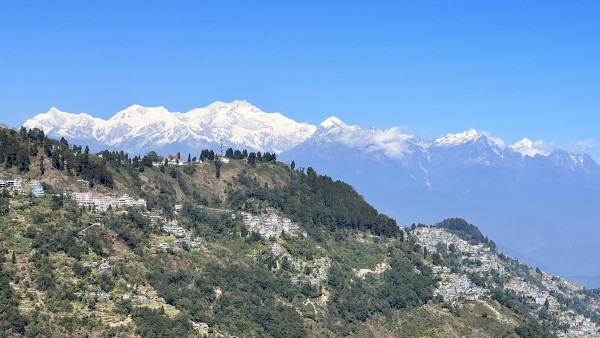
Sikkim, nestled in the majestic Eastern Himalayas, is India’s smallest state by population but a giant in terms of natural beauty and cultural richness. Dominated by the towering, sacred peak of Mount Kanchenjunga (Khangchendzonga), the world's third-highest mountain, Sikkim offers a pristine sanctuary of Buddhist monasteries, emerald valleys, terraced rice fields, and vibrant capital cities. Often referred to as the Himalayan Shangri-La, a Sikkim adventure trip is an unparalleled journey into spirituality, high-altitude trekking, and unique political history.
This comprehensive guide is meticulously structured to provide you with the most essential and practical information from vital entry logistics (permits are key here!) to the must-see sights across its diverse districts ensuring your planning is clear and your high-altitude exploration is rewarding.
How to Reach Sikkim
The final journey into Sikkim requires either air travel to its single airport or rail travel followed by a scenic road trip up the mountains.
1. By Air (Nearest Airport)
Sikkim has made access significantly easier with its own operational airport.
- Pakyong Airport (PYG): This is the nearest airport to Gangtok, located about 35 km from the capital. Pakyong is a domestic airport offering direct flights from major Indian cities like Delhi, Kolkata, and Guwahati. Flying into Pakyong offers the shortest and most direct route into Sikkim.
- Bagdogra International Airport (IXB), West Bengal: This was historically the main gateway and remains a major transit hub, located about 125 km from Gangtok. Bagdogra has excellent flight connectivity to all parts of India.
- From Bagdogra to Gangtok: The journey takes approximately 4 to 5 hours by taxi and is a popular route for travellers looking for the best way to fly to Gangtok.
2. By Rail (Nearest Railway Station)
Sikkim currently does not have a comprehensive railway network within the state.
- New Jalpaiguri Railway Station (NJP), West Bengal: This is the nearest major railway station to Sikkim, located about 120 km from Gangtok. NJP is a major junction, connecting Sikkim's entry point to all key cities in India (Delhi, Kolkata, Mumbai, Chennai).
- From NJP to Gangtok: Upon arrival, you can easily hire a shared taxi or a private cab. This journey takes about 4 to 5 hours and is generally considered the most convenient way to reach Sikkim from Kolkata by train.
3. By Road (The Mountain Ascent)
- National Highway 10 (NH10): This highway is the lifeline of Sikkim, connecting Siliguri (West Bengal) to Gangtok. The road is stunningly beautiful, following the Teesta River, but it is prone to landslides during the monsoon.
- Bus and Taxi Services: Regular shared taxi services (like the Sikkim Nationalised Transport - SNT buses) and private taxis run frequently from Siliguri, NJP, and Bagdogra to Gangtok.
Essential Permit Requirements (CRITICAL Information)
Certain regions of Sikkim particularly North Sikkim and all areas bordering China (like Tsomgo Lake and Nathula Pass) are controlled and require special permits.
- Restricted Area Permit (RAP) / Inner Line Permit (ILP): Indian nationals require an ILP for high-altitude areas like North Sikkim (Lachung, Lachen, Yumthang Valley). Foreign nationals require an additional Restricted Area Permit.
- Booking: These permits are mandatory and are typically arranged by your registered tour operator or travel agent in Gangtok. You must provide photo ID and passport-sized photos. It is impossible to visit certain areas without pre-arranging these documents, which is a key part of planning any North Sikkim tour package.
Best Time to Visit Sikkim
- Spring/Summer (March to June): This is arguably the best time to visit Sikkim. The weather is extremely pleasant and mild, making it perfect for sightseeing and high-altitude travel. The rhododendrons and orchids are in full bloom, especially in the Yumthang Valley (known as the Valley of Flowers). This is the best window for Sikkim sightseeing with clear mountain views.
- Autumn (September to Mid-November): This is the second-best window. The monsoon clouds have retreated, leaving the atmosphere crisp and clean, offering the clearest views of Mount Kanchenjunga. The temperatures are cool, ideal for trekking and photography.
- Winter (December to February): This season is intensely cold, with heavy snowfall. Roads to North Sikkim (like Yumthang and Gurudongmar Lake) are often closed due to snow. However, this is the time for travellers seeking a white, snowy landscape, especially around Tsomgo Lake.
- Monsoon (July to August): Heavy rainfall makes this the off-season. Landslides are frequent, travel is often delayed, and views are obscured by clouds. This time should generally be avoided unless you are comfortable with unpredictable travel and road conditions.
History of the Chogyal Kingdom and Indian Statehood
- The Namgyal Dynasty: Sikkim was founded in the 17th century by the Namgyal dynasty, established by three revered Lamas. The ruler held the title of Chogyal (Dharma King). The kingdom was initially much larger, extending into parts of modern-day Nepal, Bhutan, and Tibet.
- British Influence: Throughout the 18th and 19th centuries, the kingdom faced continuous threats from Nepal and Bhutan. It eventually allied with the British, who officially recognized Sikkim as a protected state in 1861, ensuring its autonomy while managing its foreign relations.
- Protected State: After India's independence in 1947, Sikkim continued as a protectorate of India, retaining the monarchy but with India responsible for defence, external affairs, and communications.
- Accession to India (1975): Following a period of political unrest and the erosion of the Chogyal's authority, a referendum was held in 1975. The majority voted in favor of abolishing the monarchy and merging with the Indian Union. Sikkim officially became the 22nd state of India on May 16, 1975. This transition is a key point of Sikkim political history and culture.
Exploring the Districts – Regions and Places to Visit
Sikkim is administratively divided into six districts, but for tourism purposes, it is best explored by its four main regions, each offering a distinct experience.
1. East Sikkim (Gangtok and Surroundings)
This region is the most accessible and developed, serving as the cultural and political centre.
- Gangtok (Capital): The capital city and a vibrant hub, famous for its pedestrian-only main street, MG Marg.
- Things To Do: Stroll and shop at MG Marg, visit the Rumtek Monastery (one of Tibetan Buddhism's most sacred sites), and take the ropeway for panoramic city views.
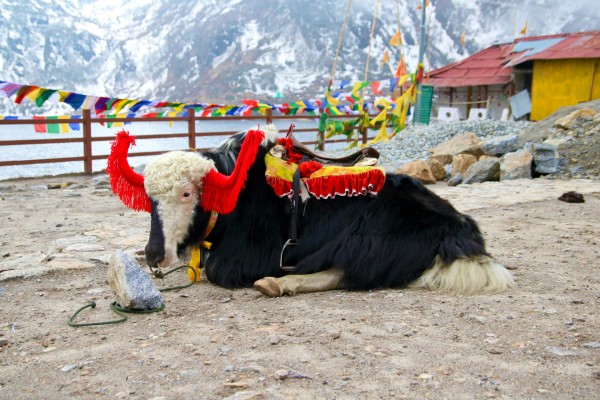
- Tsomgo Lake (Changu Lake): A high-altitude sacred lake, often frozen in winter, located en route to Nathula Pass. It's a popular spot for yak rides in Sikkim. Requires a permit.
- Nathula Pass: A mountain pass on the Indo-China border, located at 14,140 feet. It is a vital ancient trade route (part of the Old Silk Route) and a major tourist destination, offering a close view of the border post. Requires a strict permit. Nathula Pass travel guide and permit rules are heavily searched topics.
2. North Sikkim (Lachen, Lachung, Yumthang Valley)
The most remote and spectacular region, mandatory to visit with a tour package and permit.
- Lachung: A picturesque village serving as the base for the Yumthang Valley.
- Yumthang Valley (Valley of Flowers): A high-altitude pasture valley famous for its lush meadows and its incredible display of hundreds of varieties of rhododendrons, especially in the spring.
- Lachen: The base village for Gurudongmar Lake.
- Gurudongmar Lake: One of the highest lakes in the world (over 17,000 feet) and considered sacred by Buddhists, Hindus, and Sikhs. The air is thin, and the lake is often partially frozen, offering one of the most mesmerizing views in the Himalayas. The journey is difficult but profoundly rewarding.
3. West Sikkim (Pelling and Yuksom)
The region of historical significance and offers the best close-up views of Mt. Kanchenjunga.
- Pelling: Famous for offering the most unobstructed, close-range view of the Kanchenjunga range, often considered the best viewpoint in Sikkim.
- Places to Visit: Pemayangtse Monastery (one of the oldest and most important monasteries in Sikkim) and the Skywalk (a glass-bottomed structure offering dizzying views).
- Yuksom: The first capital of Sikkim. It is the historical starting point for the famous Goechala Trek, which leads to the Kanchenjunga base.
4. South Sikkim (Namchi and Ravangla)
Known for its cultural sites, tea estates, and panoramic views of the entire region.
- Namchi: Famous for its massive statues.
- Temples/Sites: Siddheshwar Dham (Char Dham), a pilgrimage centre that features replicas of all four Char Dham temples of India under one roof, and a large statue of Lord Shiva.
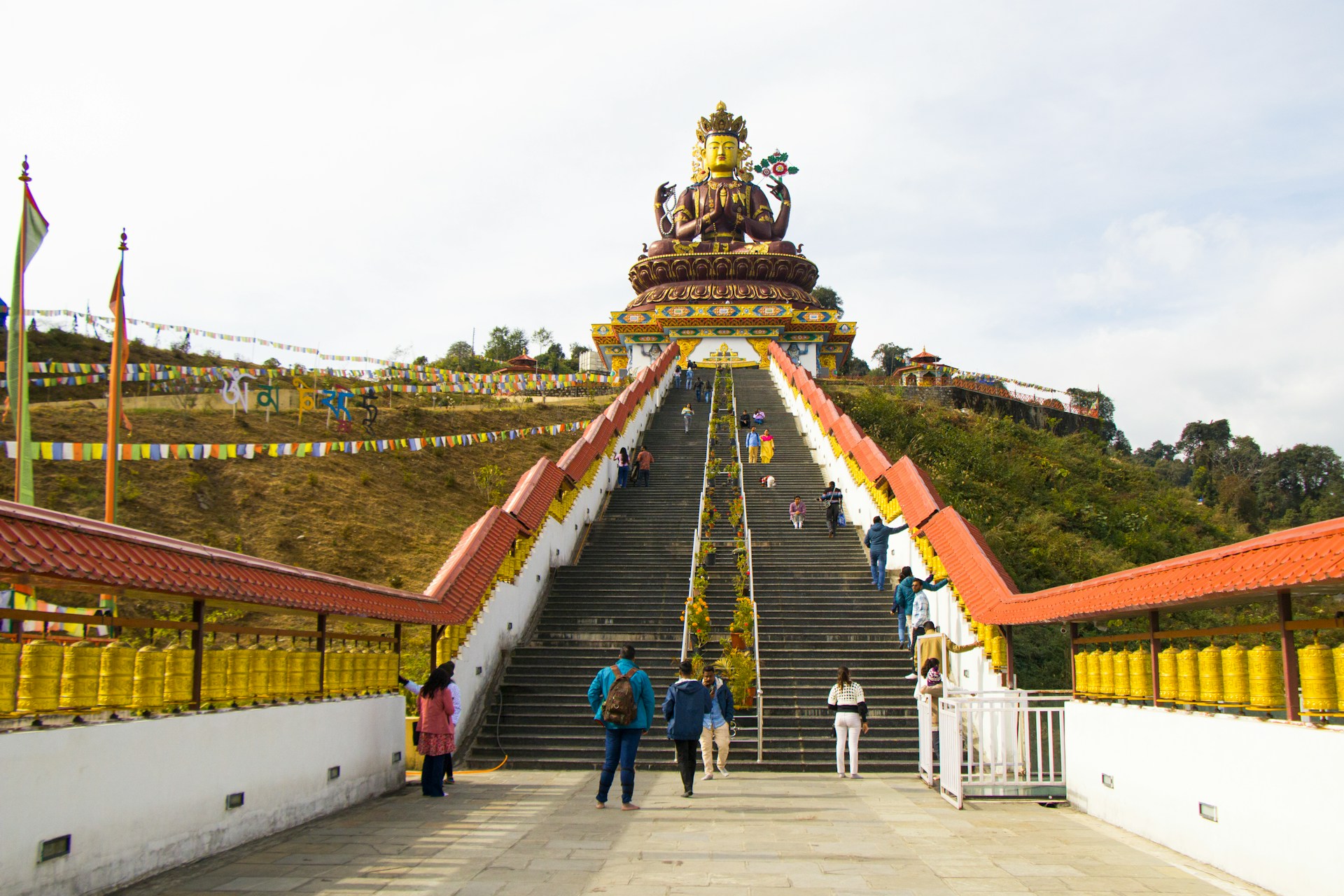
- Ravangla: A scenic mountain town known for the Buddha Park (Tathagata Tsal), which features a majestic 130-foot tall statue of the Buddha, set against the backdrop of the Himalayas. Ravangla offers some of the best homestays in Sikkim for an authentic experience.
Things To Do In Sikkim
A visit to Sikkim is defined by its core experiences the monasteries, the mountains, and the unique flora.
1. Spiritual Circuit (Monasteries)
The spiritual heart of Sikkim lies in its Gompas, which are centers of learning and worship for Tibetan Buddhism.
- Rumtek Monastery (Dharma Chakra Centre): Near Gangtok, this is the largest and most significant monastery in Sikkim, serving as the main seat of the Karma Kagyu lineage.
- Pemayangtse Monastery: Located near Pelling, renowned for its ancient wall paintings and religious scroll work.
- Tashiding Monastery: One of the most sacred monasteries, believed to cleanse the devotee of all sins. Its remote location makes it a peaceful trek.
2. Trekking and High-Altitude Adventure
Sikkim is a global hotspot for high-altitude trekking.
- Goechala Trek: The most famous trek, offering a stunning up-close view of the Kanchenjunga face. It is often searched as Goechala Trek difficulty and best time.
- Dzongri Trek: A shorter, slightly less strenuous alternative to the Goechala Trek, perfect for accessing high-altitude views in West Sikkim.
- White Water Rafting: Available on the Teesta River (and its tributary, the Rangeet River) during the non-monsoon months, offering a thrilling experience amidst the mountain scenery.
- Paragliding: Available near Gangtok for a spectacular aerial view of the capital and the surrounding peaks.
3. Flora and Fauna
- Khangchendzonga National Park: A UNESCO World Heritage site covering a huge part of North and West Sikkim, famous for its diverse ecosystem, including snow leopards, red pandas, and the state's incredible variety of orchids. Sikkim is famous for orchids, with over 500 varieties.
- Flower Shows: Visit the Flower Exhibition Centre in Gangtok to see the stunning array of Himalayan flowers, particularly the rare varieties of orchids.
Practical Tips for High Altitude
- Acclimatization: Always plan to spend at least one day in Gangtok to acclimatize before heading to the high-altitude areas of North Sikkim (Lachen/Lachung) to prevent altitude sickness.
- Connectivity: Mobile network connectivity is excellent in Gangtok, Pelling, and Namchi but can be sparse or non-existent in remote parts of North Sikkim.
- Vehicle Hire: Taxis are usually hired on a point-to-point basis or booked for a full day. Hiring a certified driver is the safest way to navigate the steep, winding mountain roads.
Top Things to Do & Activities in sikkim
Discover a world of unforgettable experiences and top activities at this destination! Whether you’re seeking adventure, cultural immersion, relaxation, or family fun, find the best things to do—from sightseeing and outdoor adventures to culinary delights, spiritual journeys, and local events. Enjoy every moment and make your trip truly memorable!