Discover Amazing Nainital
Discover Nainital, the enchanting Lake District of India nestled in Uttarakhand's Himalayan foothills. Famous for its pristine Naini Lake, scenic hill views, charming Mall Road, and adventure activities, Nainital offers a perfect blend of natural beauty and colonial charm for all travelers.
About This Destination
Nainital, often called the "Lake District of India," is the crown jewel of the Kumaon region in Uttarakhand. Nestled in a valley around the eye-shaped Naini Lake, this charming hill station is famous for its shimmering waters, mist-covered mountains, and lush colonial ambiance. It offers the quintessential Himalayan weekend getaway from Delhi NCR, blending spiritual devotion with accessible adventure and stunning natural beauty.
What truly makes Nainital a traveler favorite is the incredible ease of accessibility combined with its unique geographical layout the town is neatly divided into Mallital (the northern head of the lake) and Tallital (the southern foot), connected by the bustling Mall Road. This clear structure helps visitors navigate the hill station without getting lost. This guide is designed to be the ultimate companion for your trip, providing all the logistical details and compelling sights that tourists consistently find helpful and like.
How to Reach Nainital
Nainital's location in the Kumaon foothills means the journey involves reaching the plains below and then ascending a winding mountain road. The connectivity is excellent, making the travel straightforward and efficient.
Nearest Railway Station: Kathgodam (KGM)
- Kathgodam Railway Station (KGM): This is the most crucial and nearest railhead to Nainital, located approximately 35 to 40 kilometers away. Kathgodam is a major terminal point for the broad-gauge line of the North Eastern Railway, earning it the moniker, the "Gateway to Kumaon."
- Connectivity: Kathgodam is incredibly well-connected to major Indian cities, especially New Delhi, Lucknow, and Kolkata. Key trains like the Ranikhet Express and the New Delhi Shatabdi Express run daily, offering comfortable overnight or fast-day travel options from the capital. The journey from Delhi takes roughly 5.5 to 7 hours.
- Transfer to Nainital: From Kathgodam station, it’s an easy, hour-long drive uphill. Shared taxis, private cabs, and regular state-run buses are abundantly available right outside the station to take you directly to the Tallital Bus Stand in Nainital.
- Haldwani (HDW) and Lalkuan (LKU): These are other nearby stations, but Kathgodam remains the preferred terminus due to better express train frequency and superior taxi/bus services.
Nearest Airport: Pantnagar (PGH)
- Pantnagar Airport (PGH): This is the nearest domestic airport to Nainital, situated about 65 to 72 kilometers away in the Udham Singh Nagar district.
- Connectivity: Pantnagar offers limited but direct flight connectivity, primarily to and from New Delhi. Taxis and private cabs are readily available outside the airport for the approximately 2-hour road journey to Nainital.
- Indira Gandhi International Airport, Delhi (DEL): Located about 300 kilometers away, DEL is the nearest international airport and the practical choice for travelers coming from farther states or abroad. From Delhi, the journey continues via an overnight train or a direct road trip.
By Road: The Scenic Mountain Drive
Nainital is easily accessible by road, with National Highway 87 (NH 87) connecting it to the rest of the country.
- Route: The road journey from Delhi is about 300-320 kilometers and typically takes 6-7 hours, making it a very popular long-weekend road trip destination. The drive is smooth through the plains and becomes a beautiful winding ascent from Kathgodam.
- Bus Services: The Uttarakhand Transport Corporation (UTC) and various private operators run frequent overnight Volvo and AC buses from Delhi’s ISBT Anand Vihar directly to Nainital’s Tallital Bus Stand, which is the most convenient budget travel option.
Best Time to Visit: Clear Views or Snowy Slopes
Nainital is a year-round destination, but the ideal time to visit depends entirely on your preferred climate and activities.
Summer (March to June): The Peak Season
- What to Expect: This is the best time to visit Nainital for pleasant weather. Temperatures are moderate, ranging from 15°C to 28C. The skies are generally clear, and the weather is perfect for boating, trekking, and sightseeing.
- Best For: Families, honeymooners, and outdoor activities like the cable car ride to Snow View Point and day trips to the surrounding lakes (Sattal, Bhimtal). This is the busiest time, so expect crowds and book accommodation early.
Monsoon (July to September): The Romantic, Misty Retreat
- What to Expect: The area receives moderate to heavy rainfall. While the hills turn a rich, vibrant green and the Naini Lake swells, frequent rains and the risk of minor landslides can make travel slightly unpredictable.
- Best For: Budget-friendly travelers (due to off-season discounts), those seeking solitude, and photographers who love capturing the mountains shrouded in romantic mist. Festivals like the Nanda Devi Fair often fall in September, offering a rich cultural experience.
Winter (October to February): Clear Skies and Snowfall
- What to Expect: The start of winter (October-November) brings crisp, clear weather perfect for spectacular, unobstructed views of the Himalayas. December and January are intensely cold, with temperatures dipping below 0°C.
- Best For: Snow seekers (who should target late December or January), winter lovers, and travelers aiming for clear, sharp Himalayan peak views from Snow View and Naina Peak. Heavy woolens are mandatory.
History and Legend: The Eye of Sati
Nainital’s history is steeped in mythology and defined by its colonial foundation.
The Mythological Origin
The town's name, Naini-Tal, translates to "Lake of the Eye." According to Hindu legend, this area is one of the 51 Shakti Peethas. The story goes that when Lord Shiva carried the charred body of Goddess Sati, her right eye (Nain) fell to the ground at this location, creating the sacred lake. The revered Naina Devi Temple stands precisely at the spot where the eye is believed to have fallen, making the lake itself a sacred site the Tri-Rishi-Sarovar, as mentioned in the Skanda Purana.
The British Founding and Colonial Past
- Discovery in 1841: Unlike older hill stations, Nainital was officially "discovered" and founded in 1841 by P. Barron, a British sugar trader from Shahjahanpur. He was captivated by the majestic beauty of the lake and built the first European house, Pilgrim Lodge.
- Colonial Hub: The British soon developed Nainital into a prominent summer capital for the United Provinces (modern Uttar Pradesh). The town flourished as a health resort, complete with the Mall Road, gothic churches, and sprawling English public schools. The remnants of this era are visible in the architecture of places like the Governor's House (Raj Bhawan) and the St. John in the Wilderness Church.
- The Great Landslide of 1880: A devastating event occurred in September 1880, when a massive landslide wiped out several buildings on the northern bank (Mallital) and caused significant loss of life. This disaster led to strict building regulations and the construction of extensive storm drains to prevent future tragedies, fundamentally shaping the current layout of the town.
Places to Visit: The Charm of Nainital and the Surrounding Lakes
Nainital's attractions center around the lake and the high points offering spectacular views.
1. The Heart of the City: Naini Lake and Mall Road
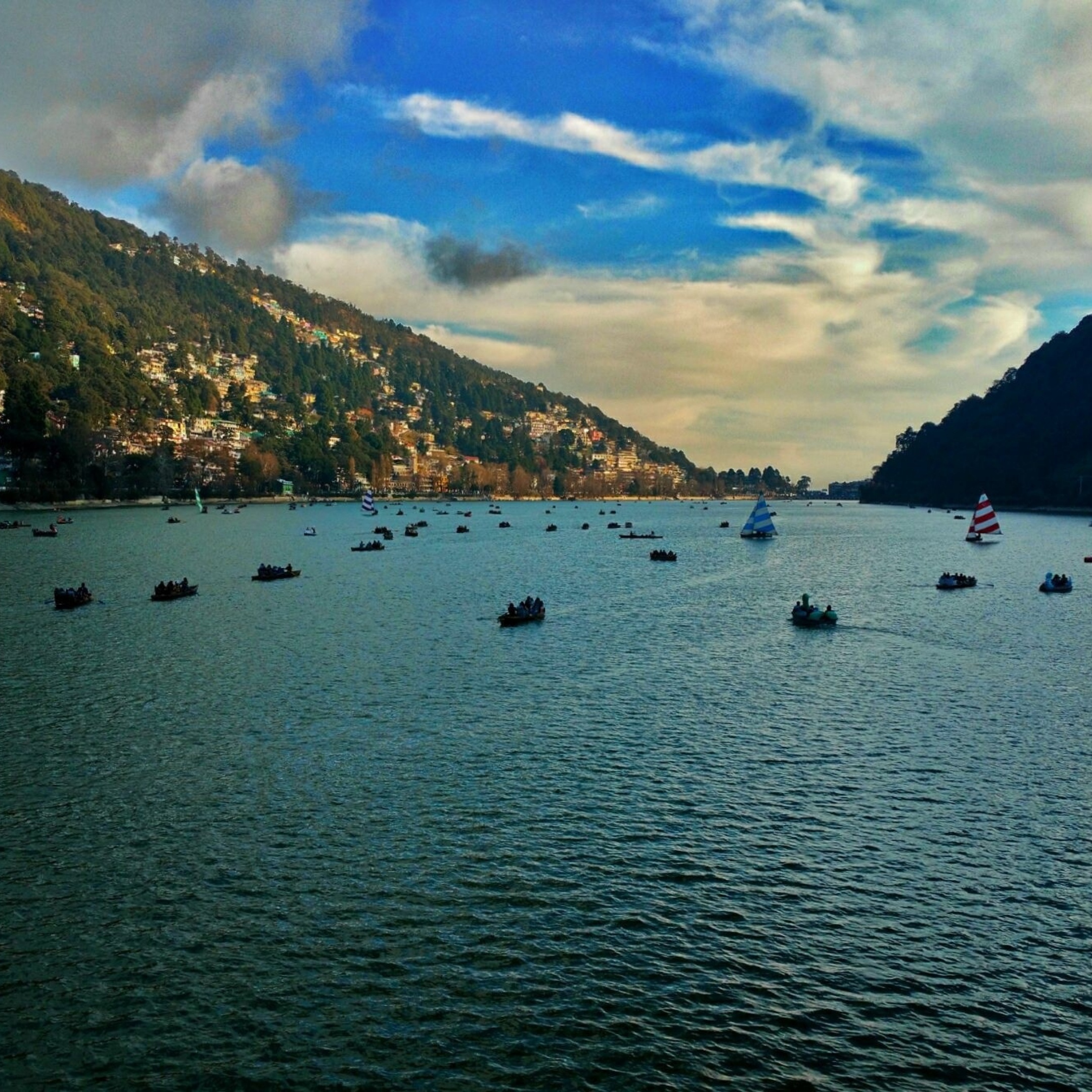
- Naini Lake: The soul of Nainital. This natural, freshwater, crescent-shaped lake is surrounded by seven towering hills. It is divided into two sections: Mallital (north, containing the Flatts and Naina Devi Temple) and Tallital (south, containing the bus stand and railway reservation counter).
- Boating: The most popular activity is boating on Naini Lake, which includes traditional rowing boats, paddle boats, and for a truly unique experience, a shikara ride at sunset.
- The Mall Road (Govind Ballabh Pant Marg): Running parallel to the lake, this road connects Mallital and Tallital. It is the vibrant social and commercial hub, lined with hotels, restaurants, shops, and the famous Tibetan Market. A leisurely evening stroll, or chakkar, along the Mall is a mandatory Nainital experience.
2. Viewpoints and Highest Peaks
To truly appreciate the valley, visitors must ascend to the surrounding peaks.
- Snow View Point: Located at an altitude of 2,270 meters, this is the most accessible high point, reached via the Nainital Ropeway (Aerial Cable Car) from Mallital. It offers breathtaking panoramic views of the entire town, the Naini Lake, and the majestic, snow-capped Himalayan peaks, including Nanda Devi, Trishul, and Nanda Kot. This is an essential Nainital sightseeing spot.
- Naina Peak (China Peak): At 2,615 meters, this is the highest point in Nainital. It requires a trek of about 6 kilometers (or a pony ride) to reach the summit. The effort is rewarded with a quiet, stunning 360-degree view of the entire Kumaon region and a more secluded perspective of the Himalayas.
- Tiffin Top (Dorothy's Seat): Also known as Dorothy's Seat, this popular picnic spot is situated on the Ayarpatta Hill. It offers another excellent vantage point for a full view of Nainital town and the surrounding mountains. It’s easily accessible via a 4 km trek or horse ride.
3. Spiritual and Historical Monuments
- Naina Devi Temple: Situated on the northern bank (Mallital), this highly revered temple is dedicated to the Hindu Goddess Naina Devi. It is a Shakti Peeth and draws thousands of devotees, especially during the Navaratri festival. The temple is one of the oldest spiritual sites in the area.
- Raj Bhawan (Governor's House): Designed in the Victorian Gothic style, this magnificent building was once the summer residence of the Governor of the North Western Provinces. Its architecture resembles a Scottish castle, complete with an expansive deer park and a golf course. It is a prime example of Nainital's colonial heritage.
- St. John in the Wilderness Church: One of the oldest and most beautiful churches in Nainital, built in 1846. It is located amidst a serene forest of pine and deodar, known for its stunning Neo-Gothic architecture and peaceful atmosphere.
4. Exploring the Surroundings (The Tal Circuit)
The region is famous for its interconnected lakes, providing great day trip options from Nainital.
- Bhimtal: About 22 kilometers away, Bhimtal is a larger lake than Naini Lake and features a picturesque island in the center, housing an aquarium. It is quieter than Nainital and is a popular spot for adventure activities like kayaking.
- Sattal (Seven Lakes): A cluster of seven interconnected freshwater lakes, offering a truly tranquil environment. It's a paradise for nature lovers, popular for bird watching in the Kumaon region and camping.
- Naukuchiatal: Meaning "nine-cornered lake," it is the deepest of the lakes in the region. Legend says one achieves Nirvana by viewing all nine corners simultaneously. It's famous for its peaceful environment and activities like yachting and angling.
- Kainchi Dham: Located 17 km from Nainital, this renowned ashram and temple complex was founded by the revered Neem Karoli Baba. It gained international recognition after visits by notable Western figures like Steve Jobs and Mark Zuckerberg. It is a major spiritual pilgrimage centre near Nainital.
Things To Do: Adventure, Leisure, and Local Flavor
Nainital offers diverse activities for all types of travelers.
- Trekking and Hiking: Besides the treks to Naina Peak and Tiffin Top, the surrounding Kilbury and Pangot areas are renowned for excellent, scenic hiking trails through dense Himalayan forests, offering spectacular long-distance views of the Himalayas.
- Bird Watching: The Pangot and Kilbury Bird Sanctuary, just a short drive from the main town, is a paradise for ornithologists, home to hundreds of species of Himalayan birds, making it a key attraction for eco-tourism in Nainital.
- High Altitude Zoo (Pt. G.B. Pant High Altitude Zoo): Located on Sher Ka Danda hill, this well-maintained zoo is home to rare and endangered Himalayan species like the Snow Leopard, Siberian Tiger, Himalayan Bear, and various high-altitude birds. It’s a great educational and family-friendly spot.
- Cave Exploration at Eco Cave Gardens: A popular tourist spot, particularly for children, featuring a network of six interconnected small caves carved into the hillside, mimicking the natural habitats of various animals.
Top Things to Do & Activities in Nainital
Discover a world of unforgettable experiences and top activities at this destination! Whether you’re seeking adventure, cultural immersion, relaxation, or family fun, find the best things to do—from sightseeing and outdoor adventures to culinary delights, spiritual journeys, and local events. Enjoy every moment and make your trip truly memorable!